




Understanding Brain Fog Symptoms and Finding Clarity


Experiencing "brain fog" can be deeply frustrating and confusing. The term is often used to describe a persistent set of cognitive difficulties, but online advice can be conflicting, leaving you unsure what is actually happening.
This guide is designed to offer clarity. It explains how healthcare professionals understand brain fog symptoms, not as a personal failing, but as a signal that something in the body needs attention.
The goal here is not to offer quick fixes or miracle cures. Instead, it is to provide a grounded, clear overview of what these symptoms feel like, the patterns they often form, and the underlying factors that may be contributing. Understanding the problem is the first step toward addressing it effectively.
What Brain Fog Actually Feels Like
If you are reading this, you likely already know the feeling. It's notoriously difficult to describe to others, which can lead to a sense of isolation or even self-doubt.
It is important to state clearly: you are not imagining it. While "brain fog" is not a standalone medical diagnosis, it is a very real and recognised cluster of symptoms that can significantly disrupt daily life. Clinicians view it as a sign that an underlying imbalance or condition may need to be investigated. It is not a character flaw or a sign of weakness.
A Familiar Place Made Unfamiliar
A useful analogy is trying to navigate a familiar city after a thick fog has rolled in. You know the streets and landmarks are there, but you cannot see them clearly. Turns you have made a thousand times suddenly feel uncertain.
This is similar to how brain fog feels. Your thoughts, memories, and ability to focus are still present, but a persistent haze makes accessing them slow and difficult.
This experience often includes:
- A feeling of being "cloudy" or mentally sluggish.
- Difficulty holding onto a thought or following a conversation.
- A sense that simple mental tasks now require significant effort.
At its core, brain fog is a feeling of cognitive impairment—your mind is not functioning in the way you know it can. This can be profoundly unsettling, especially when the cause is unknown.
The Common Symptoms of Brain Fog
Putting a name to what you are feeling is a powerful first step. It transforms a vague sense of being "off" into a tangible set of challenges you can understand, track, and explain to others.
While each person's experience is unique, there are common patterns in how brain fog manifests. This is not about feeling a bit tired; the mental disruption is real and can interfere with work, relationships, and simple daily tasks.
The key difference between brain fog and normal fatigue is that with fatigue, you may feel physically spent but your mind remains relatively sharp. With brain fog, the issue is with thinking itself. People often describe it as feeling like their brain isn't working properly. For a deeper insight into these patterns, you can refer to this comprehensive UK brain fog guide.
Identifying your specific symptoms can help build a clearer picture for yourself and any healthcare professional you speak with.
Difficulty with Concentration and Focus
This is perhaps the most common aspect of brain fog. It is not simply being distracted; it is a more profound inability to hold your attention on a task.
This may manifest as:
- Reading the same sentence multiple times without the words registering.
- Losing your train of thought midway through speaking.
- Finding it difficult to follow the plot of a film or stay engaged in a meeting.
When focus is impaired, even simple activities can feel exhausting, demanding a disproportionate amount of mental energy.
Everyday Examples of Common Brain Fog Symptoms
The following table illustrates how these symptoms can appear in daily life, making abstract feelings more concrete.
| Symptom | What It Can Feel Like | Common Example |
|---|---|---|
| Poor Concentration | An inability to hold your attention on a single task. | You sit down to read a report for work, but find yourself re-reading the same page four times without absorbing any of it. |
| Short-Term Memory Loss | Forgetting things that happened recently or information you just learned. | Your partner asks you to pick up milk on the way home, and by the time you reach the shop, you've completely forgotten why you're there. |
| Word-Finding Difficulty | The word is on the "tip of your tongue," but you just can't grab it. | You're telling a story and suddenly stop, unable to think of the word "kettle," saying "...that thing you boil water in." |
| Mental Sluggishness | Your thoughts feel slow, "muddy," or like they're moving through treacle. | Someone asks you a simple question, and you can feel the cogs in your brain turning slowly before you can form a reply. |
| Feeling Overwhelmed | Simple decisions or tasks that you used to handle easily now feel impossibly complex. | Looking at a restaurant menu with lots of options makes you feel anxious and unable to choose what to eat. |
This table shows how significantly brain fog can interfere with moments we usually take for granted. It is a genuine cognitive symptom, not a matter of being lazy or careless.
Problems with Memory
Memory issues associated with brain fog typically affect short-term or "working" memory—the brain's temporary notepad. It is less about forgetting a childhood address and more about struggling with what just happened.
In clinical settings, this is often referred to as a "retrieval problem." The memory likely exists, but the pathway to access it feels blocked or slow.
This can look like:
- Forgetting a common word in the middle of a sentence.
- Frequently misplacing keys, phone, or wallet.
- Walking into a room and having no idea why you went in there.
- Struggling to recall details of a conversation from an hour ago.
Slowed Thinking and Mental Exhaustion
Another common sign is feeling as though your mental processing speed has been significantly reduced. Thinking feels sluggish, and formulating a response to a simple question can require immense effort.
This often accompanies a mental fatigue that is disproportionate to the activity performed. A short meeting might leave you feeling as drained as if you had run a marathon. This creates a persistent sense of being "hazy," where sharp, quick thinking feels out of reach.
Potential Causes and Associated Conditions
It is vital to understand that brain fog is not a medical condition in itself. Instead, it is a symptom—a signal from your body that something else is occurring under the surface. It is like a check engine light on a car's dashboard: it tells you something needs attention without specifying the exact problem.
This distinction is crucial. It shifts the focus from self-blame toward a more productive investigation into potential underlying causes. Mental clarity is often a reflection of overall physical health, and many factors can disrupt this balance.
This diagram shows how the core issues of brain fog—concentration, memory, and fatigue—are interconnected.
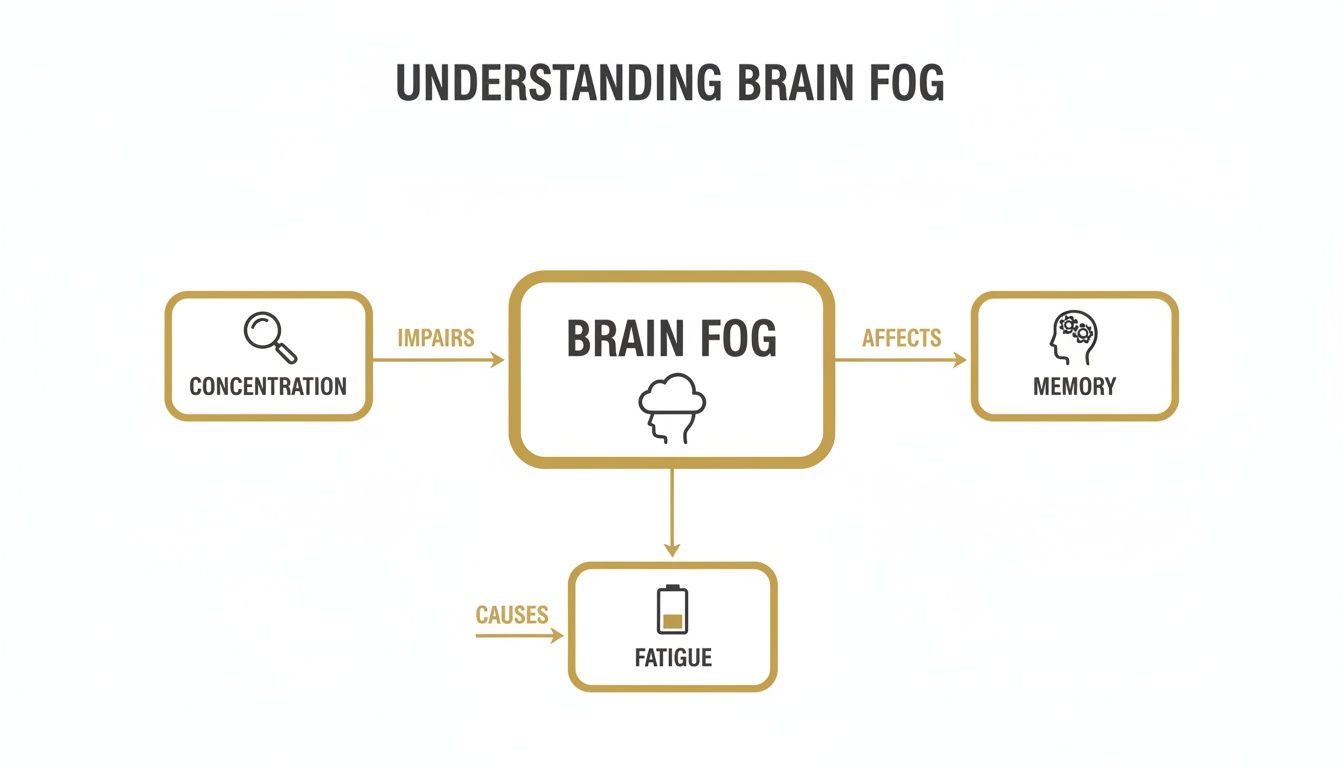
As the diagram illustrates, it is not one isolated problem but a cluster of related cognitive challenges that can reinforce one another.
Lifestyle and Environmental Factors
Healthcare professionals often first consider lifestyle factors because they are common, impactful, and often modifiable.
-
Chronic Stress and Burnout: Prolonged stress leads to elevated levels of the hormone cortisol. High cortisol can interfere with brain function, particularly memory and focus. Burnout, a state of profound emotional and physical exhaustion, is a classic trigger for severe brain fog.
-
Poor Sleep Quality: Sleep is when the brain performs essential maintenance, such as clearing out metabolic by-products and consolidating memories. Insufficient or poor-quality sleep is a reliable way to impair cognitive performance.
-
Nutritional Deficiencies: The brain requires specific nutrients to function optimally. Deficiencies in vitamins like B12, minerals such as iron, or essential fatty acids are common culprits behind fatigue and cognitive slowness.
Hormonal Shifts and Imbalances
Hormones act as the body’s chemical messengers and have a significant influence on brain function. When hormone levels are imbalanced, cognitive symptoms are often among the first to appear.
This is commonly seen during major life stages like menopause, where fluctuating estrogen levels can affect memory and clarity. Similarly, an underactive or overactive thyroid can slow mental processing speed, making brain fog a primary symptom of thyroid dysfunction.
Healthcare professionals often look at the bigger picture. Because brain fog rarely occurs in isolation, understanding its relationship with other symptoms like fatigue, mood changes, or physical discomfort helps narrow down potential causes.
Medications and Medical Conditions
Sometimes, the cause of brain fog can be found in certain medications, both prescription and over-the-counter, which list cognitive side effects. If brain fog appeared shortly after starting a new medication, it is worth discussing with your doctor.
Additionally, brain fog is a known feature of many chronic health conditions. Autoimmune diseases like lupus or multiple sclerosis can cause inflammation that impacts the brain. Conditions such as fibromyalgia and myalgic encephalomyelitis/chronic fatigue syndrome (ME/CFS) almost always include cognitive dysfunction as a central symptom. A head injury like a concussion can also lead to persistent cognitive issues; you can learn more in our guide on what is post-concussion syndrome.
How Chronic Illnesses Can Trigger Brain Fog
For many people, brain fog is not a fleeting issue caused by a bad night's sleep. It is a constant and often disabling symptom of an underlying chronic illness. In these cases, the cognitive struggles are a core part of the disease process itself.
Understanding this connection can be a form of validation. It confirms that what you are experiencing is not "all in your head" but a real, physiological response to what is happening in your body.
The Role of Systemic Inflammation
Many long-term conditions, particularly post-viral syndromes and autoimmune diseases, are driven by systemic inflammation. In a healthy state, inflammation is a short-term, targeted response to a threat.
In chronic illness, however, this inflammatory response can become stuck in the "on" position, creating a low-level inflammation that affects the entire body. This constant state of alert can disrupt the brain’s finely tuned environment, interfering with neurotransmitter signals. This is a primary reason for the profound cognitive issues seen in conditions like Long COVID and fibromyalgia. Even seemingly separate issues can contribute, which is why it can be helpful to learn how to treat chronic sinusitis at home as part of a broader health strategy.
Conditions Where Brain Fog Is a Hallmark Symptom
While brain fog can appear in many illnesses, for some conditions, it is a defining feature.
-
Myalgic Encephalomyelitis/Chronic Fatigue Syndrome (ME/CFS): In ME/CFS, brain fog is one of the most debilitating symptoms. It is closely linked with deep fatigue and post-exertional malaise (PEM), where even minor mental or physical effort can trigger a significant worsening of all symptoms.
-
Fibromyalgia: Primarily known for widespread pain, fibromyalgia is almost always accompanied by cognitive impairment, often called "fibro fog." This affects memory, concentration, and the mental agility required for daily tasks.
-
Long COVID: Since 2020, Long COVID has brought widespread attention to post-viral brain fog. The cognitive effects can be severe and last for months or even years, making it difficult for individuals to return to their normal lives.
These conditions are more common than many people realize. For instance, recent research suggests ME/CFS may affect around 404,000 people in England, a significant increase from previous estimates. In ME/CFS, brain fog is not a secondary issue; it is a core diagnostic symptom. You can read more about these updated ME/CFS prevalence findings from University of Edinburgh researchers.
From a clinical perspective, the pattern is clear: when the body is in a state of long-term immune activation or distress, the brain’s processing power is often affected. This is a biological reality, not a psychological one.
For anyone living with one of these conditions, recognizing that their brain fog has biological roots is a crucial first step. It helps shift the focus from self-blame toward practical symptom management.
When to Discuss Your Symptoms with a Doctor
While mild or occasional brain fog can often be linked to manageable factors like stress or poor sleep, there are times when it is important to consult a GP.
If your brain fog is persistent, worsening, or significantly interfering with your ability to work, study, or manage daily life, it is time to seek professional advice. Addressing it early can often lead to a clearer understanding and more effective management.
Signs That Warrant a Consultation
Certain symptoms, when accompanying brain fog, should prompt a medical consultation to rule out more serious issues.
Contact your doctor if your brain fog is accompanied by any of the following:
- A sudden and severe onset: If your thinking becomes confused very quickly and feels distinctly abnormal for you.
- New neurological symptoms: Such as new or severe headaches, blurred vision, numbness, tingling, or weakness in your limbs.
- Significant confusion or disorientation: For example, feeling lost in familiar places or being unable to recognise familiar people.
- Cognitive changes after a head injury: New symptoms following a knock to the head could be a sign of post-concussion syndrome. The complexities of this are explored in our guide to post-concussion syndrome treatment in our detailed guide.
In a clinical setting, context is everything. A gradual onset of mild brain fog during a stressful period is viewed very differently from a sudden cognitive change accompanied by a severe headache.
Preparing for Your Appointment
To have a productive conversation with your doctor, some preparation can be very helpful. Be ready to describe what your brain fog feels like, when it started, and what seems to make it better or worse.
Your doctor will also likely ask about your wider health, including sleep patterns, diet, stress levels, and any new medications. This broad view is important, particularly with the rise of conditions where cognitive symptoms are prominent.
For example, Long COVID has had a significant impact on cognitive health. ONS data from December 2021 suggested over 1.3 million people in the UK were living with it, with 28% reporting difficulty concentrating as a key symptom. You can learn more about the prevalence of these conditions here.
Your Next Steps Toward Gaining Clarity
Understanding the potential factors behind your brain fog is a significant step. It is important to recognise that what you are feeling is real and valid, not something to simply "push through." This shift from uncertainty toward understanding is often the turning point.
However, articles can only provide information. The journey to clearing the fog typically involves identifying the root cause, which may require a more structured approach.

Building a Supportive Foundation
While investigating deeper causes, certain foundational habits can create a better environment for your brain to function. These are not cures, but supportive measures.
- Prioritise Sleep: Consistent, high-quality sleep is non-negotiable for brain health.
- Manage Stress: Chronic stress is a known drain on cognitive resources. Finding effective stress management techniques can make a tangible difference.
- Consider Nutrition: The brain requires proper fuel. Exploring basic principles of supportive nutrition can be a helpful starting point.
These actions can support your well-being while you work with a healthcare professional to investigate underlying issues.
The goal is not just to cope with brain fog symptoms, but to understand them. This change in perspective is what often leads to meaningful progress.
For readers wanting a more structured overview, our guides are designed to help connect symptoms to potential causes and management strategies, providing a clearer path forward.
Common Questions About Brain Fog
Navigating brain fog often brings up many questions. Below are answers to some of the most common queries.
Can Stress Really Cause Such Severe Brain Fog?
Yes. It is easy to underestimate the physical impact of chronic stress, but it is a major driver of significant brain fog.
When you are constantly stressed, your body is flooded with the hormone cortisol. Over time, elevated cortisol can disrupt brain function, particularly in areas responsible for memory and focus. This is a direct physiological effect that can cause cognitive symptoms as debilitating as those from a physical illness.
How Long Does Brain Fog Typically Last?
The duration of brain fog depends entirely on its underlying cause.
If it is linked to a temporary issue, such as poor sleep or a demanding week, it may lift within a few days or weeks once the trigger is resolved.
However, when brain fog is a symptom of a more persistent condition—like ME/CFS, Long COVID, or a hormonal imbalance—it tends to continue until the root cause is addressed and managed effectively.
A key distinction clinicians make is between transient and persistent cognitive symptoms. While short-term fog is common, brain fog that lasts for weeks or months signals an underlying issue that warrants investigation.
Is This Brain Fog or Normal Ageing?
This is a common concern. While both can involve moments of forgetfulness, the experience is typically quite different.
Normal, age-related memory changes are usually minor and specific, such as occasionally misplacing keys or taking longer to recall a name.
Brain fog, in contrast, tends to be more pervasive. It is less about isolated memory lapses and more about a constant feeling of mental "slowness" or "haze" that affects concentration, word-finding, and information processing. This creates a much broader sense of cognitive impairment.
Also in News


When Is the Best Time to Take Magnesium? A Guide to Timing Your Supplement
Discover the best time to take magnesium for sleep, energy, or general health. Our guide explains how timing and type affect absorption and effectiveness.
Read More


Exercises for Neck Pain Relief: A Calm, Measured Approach
A calm, structured guide to gentle exercises for neck pain relief. Learn safe, effective stretches and movements to manage discomfort and improve neck health.
Read More

Post Concussion Syndrome Treatment: A Practical Guide to Recovery
A clear guide to post concussion syndrome treatment. Understand persistent symptoms, proven therapies, and how to navigate a safe and active recovery.
Read More