






Understanding Epithelial Cells in Urine Test Results


Receiving a lab report that mentions epithelial cells in your urine can be confusing. It’s a common finding, but online searches often provide conflicting information, leaving you feeling more uncertain than when you started.
One source might suggest it’s a sign of a problem, while another dismisses it as normal. This kind of contradictory advice makes it difficult to know what to think about your own results.
This guide aims to provide clarity. It's not a substitute for a conversation with your healthcare provider, but it will walk you through how clinicians typically interpret this finding. The goal is to offer a calm, clear framework so you can better understand what your results may—or may not—mean.
How Clinicians Interpret Urine Test Results

In clinical settings, a single test result rarely provides a complete answer. Healthcare professionals look for patterns, piecing together several clues to understand the bigger picture.
When it comes to epithelial cells, the interpretation depends on context. A clinician will typically consider several factors together:
- The type of epithelial cells found: Different cells line different parts of your urinary tract, from the kidneys to the urethra.
- The quantity reported: This is usually described as 'few', 'moderate', or 'many'.
- Other findings in the urine: The presence of bacteria, white blood cells, or protein can change the meaning of the result.
- Your symptoms: How you are feeling is one of the most critical pieces of information.
This approach is similar to interpreting other lab work. For instance, a complete blood count test is also assessed by looking at multiple values in relation to each other, not just one number in isolation.
A core principle in medicine is to look for patterns, not just isolated findings. Epithelial cells in a urine sample are one data point. Their significance only becomes clear when considered alongside your symptoms and other lab results.
By understanding this process, you can better appreciate why context is so crucial for accurately interpreting what epithelial cells in your urine might signify.
What Are Epithelial Cells and Why Are They in Urine?
Epithelial cells are the cells that line the surfaces of your body, both inside and out. In the urinary system, they form a protective layer that runs from the kidneys, through the ureters, into the bladder, and out through the urethra.
It is normal for your body to shed these cells as part of a natural renewal process, much like your skin sheds old cells. Because of this, finding a small number of epithelial cells in a urine sample is expected and usually not a cause for concern.
The clinical significance often lies in the type and quantity of cells found. This information helps a doctor determine where the cells may have originated from within the urinary tract.
The Three Main Types of Epithelial Cells
Healthcare professionals distinguish between three main types of epithelial cells in urine, as each points to a different area of the urinary system.
-
Squamous Epithelial Cells These are large, flat cells that come from the lining of the urethra and the skin around the genital area. They are the most common type found in urine samples. A high number often suggests that the sample was contaminated with skin cells during collection, rather than indicating a medical issue.
-
Transitional (Urothelial) Epithelial Cells These cells line the majority of the urinary tract, including your bladder and ureters. They are able to stretch as the bladder fills. While finding a few is normal, an increased number may suggest irritation or inflammation, such as that seen in a urinary tract infection (UTI).
-
Renal Tubular Epithelial Cells These are the most significant type because they come from the tubules deep inside the kidneys, where urine is made. It is uncommon to find these cells in a urine sample. Their presence can be a marker for conditions affecting the kidneys and usually prompts further investigation.
The key takeaway is this: the type of epithelial cell acts like a clue to its origin. Squamous cells point to the exit of the urinary tract, while renal cells point to the kidneys themselves.
This distinction helps clinicians separate a simple sample collection issue from a finding that may require a closer look.
Interpreting Your Urinalysis Report: A Closer Look
When you look at a lab report, you will likely see epithelial cells reported using terms like ‘few’, ‘moderate’, or ‘many’. These are general categories that help your doctor understand the context of the findings.
It is important to remember that these results are not viewed in isolation. A clinician looks for patterns, considering the epithelial cells alongside other markers like white blood cells, nitrites, and bacteria. This approach is standard for most lab work, just as a B-12 blood test result is considered as part of a wider health assessment.
Decoding Cell Types and Quantities
The most important information is often the type of epithelial cell found.
For example, a report showing ‘many’ squamous epithelial cells commonly suggests a contaminated sample. This means skin cells from outside the urethra were likely mixed in during collection. While not a certainty, it can sometimes affect the reliability of other results from that same sample.
Conversely, finding even a small number of renal tubular cells is generally considered more significant. Because these cells come from deep within the kidneys, their presence might prompt a closer look at kidney function. This doesn't automatically mean there is a serious problem, but it is a finding that healthcare professionals tend to investigate further.
This diagram helps visualize where each cell type originates within the urinary tract.
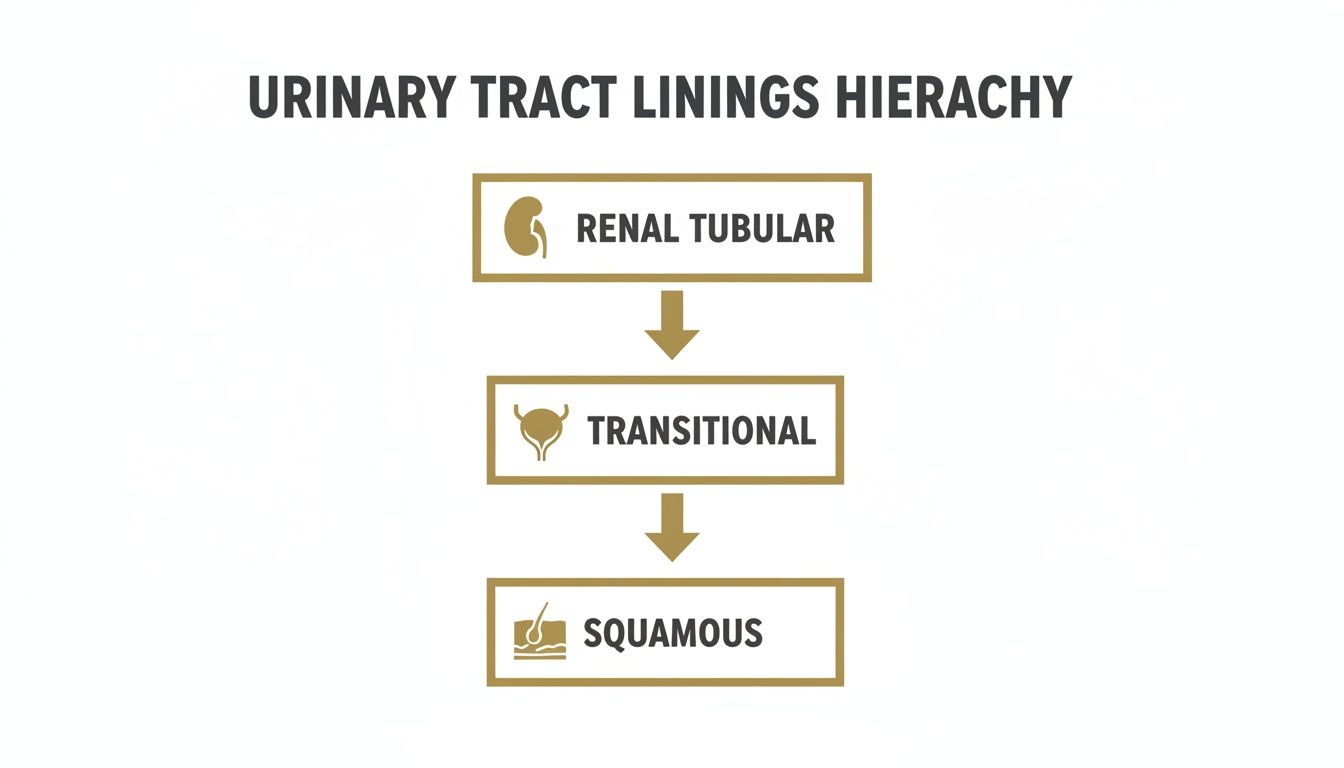
As shown, squamous cells line the outermost parts, whereas renal tubular cells are found deep inside the kidneys. This difference in origin is why their clinical significance varies so greatly.
Clinicians look for patterns. They do not focus on a single number or finding. Instead, they connect the dots between cell types, quantities, other lab markers, and your symptoms to build a complete picture of what may be happening.
To clarify, this table provides a quick reference for what each cell type might indicate.
Types of Epithelial Cells in Urine and Their Significance
| Cell Type | Origin | Common Interpretation |
|---|---|---|
| Squamous | Urethra and external skin | Often suggests sample contamination. A small amount is considered normal. |
| Transitional | Bladder and ureters | A few are normal. Higher numbers may point to irritation or a urinary tract infection (UTI). |
| Renal Tubular | Kidney tubules | Rare in urine. Presence may prompt a closer look at kidney health. |
This breakdown helps explain why a doctor might not be concerned about a high count of one cell type but may pay closer attention to a low count of another. It’s all about the origin and the context.
Common Reasons for Elevated Epithelial Cells

If your test results show a high number of epithelial cells, there are a few common explanations that a clinician will consider first.
Sample Contamination
The most frequent reason for a high count of squamous epithelial cells is contamination during sample collection. These are skin cells from the genital area and the opening of the urethra. It is very easy for them to get washed into the collection cup.
This is why you are often given instructions for a ‘mid-stream clean-catch’ sample. This method is designed to provide a sample that more accurately reflects the urine inside your bladder, not what's on the surrounding skin.
A proper clean-catch technique involves:
- Washing your hands with soap and water.
- Cleaning the area around the urethra with a sterile wipe.
- Beginning to urinate into the toilet to flush the urethra.
- Collecting the sample mid-stream in the sterile cup.
- Finishing urination in the toilet.
Following these steps helps ensure the accuracy of your test results.
Urinary Tract Infections (UTIs)
Another common cause of increased epithelial cells is a urinary tract infection. Inflammation of the bladder lining (cystitis) can cause it to shed more transitional epithelial cells than usual.
A clinician will interpret this finding alongside other signs of a UTI, such as the presence of white blood cells, bacteria, or nitrites in the urine. Elevated epithelial cells can be a clue pointing towards conditions like Urinary Tract Infections (UTIs).
However, the connection isn't always straightforward. UK public health guidance cautions that a high epithelial cell count does not automatically mean a sample is contaminated, especially if a person has symptoms. You can learn more about how clinicians interpret these results from gov.uk.
In clinical practice, symptoms are a primary guide. A report showing 'many' epithelial cells in someone experiencing painful urination is viewed very differently from the same report in someone with no symptoms.
Kidney Conditions
Less commonly, the presence of renal tubular epithelial cells can indicate a problem affecting the kidneys. These cells line the delicate tubules inside the kidneys, and they are not typically found in urine.
Their presence might suggest inflammation, injury, or another condition affecting kidney health. This finding is usually taken seriously and will often lead to further tests, such as blood work to check kidney function or imaging scans. A diagnosis is never made from one test alone; it is a signal to investigate further.
Natural Body Processes and Hormonal Changes
Not every variation in a urine test points to a medical problem. Your body is a dynamic system, and many natural processes can influence your results without signaling that anything is wrong.
For women, the hormonal fluctuations of the menstrual cycle are a key example. These changes can affect the number of epithelial cells shed into the urine, and this is often a normal part of the body's monthly rhythm.
How the Menstrual Cycle Can Affect Results
The linings of the urinary and reproductive tracts are sensitive to hormones like oestrogen and progesterone. As these levels rise and fall during the month, the rate at which cells are shed can also change.
This means a urine sample collected at one point in the cycle might have a different epithelial cell count than one taken two weeks later, even in perfect health. This can sometimes lead to a higher count of squamous or transitional epithelial cells.
In practice, clinicians consider the body's natural rhythms. A test result that seems unusual on its own can often make sense when viewed in the context of normal hormonal changes.
This is why it's helpful to be aware of your own body's cycles. Knowing where you are in your cycle when you provide a sample can be valuable information for your doctor, helping to prevent unnecessary concern over a normal finding.
Research has highlighted how significantly hormones can predict the number of epithelial cells in a woman's urine. One study noted this is important because samples with high cell counts are sometimes dismissed as 'contaminated', which could lead to a missed diagnosis. You can read more about these important findings from the International Continence Society.
Understanding these natural fluctuations helps everyone involved make better sense of what a urine test is really showing.
When to Discuss Your Results with a Doctor
While this guide aims to demystify your urinalysis report, it is intended to support, not replace, a conversation with your healthcare provider. Understanding your results is the first step; knowing what to do next is crucial.
There are certain times when epithelial cells in your report, combined with specific symptoms, should prompt a call to your doctor. These symptoms are signals that something may need a closer look.
Key Symptoms to Be Aware Of
The presence of epithelial cells in urine becomes more significant when you are also experiencing symptoms that suggest an infection or inflammation in the urinary tract.
Pay attention to these signs:
- Painful or burning urination
- A frequent or intense urge to urinate, even if little comes out
- Fever or chills, which may indicate an infection
- Pain in the lower back or side (flank), which could suggest kidney involvement
- Cloudy, strong-smelling, or bloody urine
If you are experiencing any of these symptoms, it is important to seek professional medical advice.
What to Expect from a Follow-Up
Your doctor will use your symptoms and the initial urine test as a starting point. Further steps may include:
- A Repeat Test: If sample contamination is suspected, your doctor may ask for a new, carefully collected mid-stream sample.
- A Urine Culture: This test can identify specific bacteria causing an infection, which helps in selecting the right antibiotic.
- Blood Tests: These may be ordered to assess your overall health and check kidney function. Understanding other diagnostics, such as a liver function test, can help show how different tests provide a complete health picture.
When you're ready to discuss your results, remember that timely advice is key. Services that provide a UK online doctor prescription can offer a convenient and quick way to speak with a healthcare professional and get the guidance you need.
Frequently Asked Questions
Here are some answers to common questions about epithelial cells in urine test results.
Can Dehydration Affect Epithelial Cell Counts?
Yes, dehydration can play a role. When you are dehydrated, your urine becomes more concentrated. This can make the number of epithelial cells in urine appear higher than it would be otherwise.
While staying hydrated is important for urinary health, a high count shouldn't be automatically dismissed as being due to dehydration. It's still a finding to discuss with your doctor, as dehydration can also contribute to urinary tract issues.
Are Epithelial Cells in a Child's Urine a Concern?
Finding a few epithelial cells in a child's urine is generally normal, just as it is for adults. A doctor will interpret the results using the same context-based approach.
They will consider:
- The type and quantity of the cells.
- Whether the child has any symptoms, such as fever, pain during urination, or abdominal discomfort.
As with adults, a high number of squamous cells often points to sample contamination, which can be common when collecting a sample from a young child. It is always best to discuss the results with your child’s doctor for a proper evaluation.
Should I Change My Diet?
Generally, no. The number of epithelial cells in your urine is not directly linked to your diet. These cells are shed from the urinary tract lining due to natural turnover or in response to factors like inflammation.
While diet can influence other aspects of a urinalysis, such as urine pH or the formation of certain crystals, it does not typically cause an increase in the shedding of epithelial cells. A clinician's focus will be on identifying the underlying cause, such as a possible infection, rather than recommending dietary changes for this specific finding.
If you have more questions, you can browse our full library of frequently asked questions for more insights.
This article is intended to help you make sense of your test results and reduce confusion. For those who want to go beyond articles and gain a more structured understanding of how symptoms, tests, and treatments connect, the guides from The Patients Guide offer a clear, step-by-step framework.
Explore the full library of guides at https://www.thepatientsguide.co.uk
Also in News


Blood Test Results Time: Your UK Guide
Get precise blood test results time info for the UK in 2026. Understand NHS turnaround, common delays, how to check your results, and when to contact your GP.
Read More


Headache Quick Remedy: Immediate Relief Guide
Headache quick remedy - Find a headache quick remedy that works. Our guide helps you understand your headache and choose safe, effective action for immediate
Read More


Mouth Ulcers Treatment: A Clear Guide
A calm, clear guide to mouth ulcers treatment. Learn about causes, self-care, OTC options, when to see a doctor, and how to prevent recurring ulcers.
Read More