




Dizziness Before Periods: Understanding the Causes and Patterns

Experiencing dizziness, unsteadiness, or light-headedness in the days leading up to your period can be unsettling and confusing. If you have searched for answers online, you have likely found conflicting advice that leaves you with more questions than answers.
This guide is not a list of quick fixes. Its purpose is to offer a clear, calm explanation of why premenstrual dizziness happens, framed from a clinical perspective. The goal is to replace uncertainty with understanding.
Feeling this way can be frustrating, but it is a recognised physical symptom of premenstrual syndrome (PMS). Dizziness before a period is a common experience, directly linked to the hormonal shifts of the menstrual cycle.
Dizziness before periods is a common physical symptom tied to premenstrual syndrome (PMS), affecting a significant number of women in the UK. According to global data referenced in UK health discussions, PMS has an estimated prevalence of 47.8% among women of reproductive age, with severe forms impacting daily life for 3-8%.
We will explore the hormonal changes that are often the primary cause of this symptom, as well as other factors that can contribute to feeling unsteady. By understanding the patterns, you can feel more in control and better prepared to manage your symptoms or discuss them with a healthcare professional.
For readers who want to explore the broader range of premenstrual symptoms, a helpful resource is this guide on understanding PMS and PMDD.
This article aims to provide clarity by focusing on the underlying mechanisms in your body. Understanding the 'why' behind the symptoms is the first step toward connecting the dots between your menstrual cycle and your daily well-being.
How Hormonal Shifts Can Trigger Dizziness
To understand why you might feel dizzy before your period, we need to look at the significant hormonal shifts that occur. In the week or so before menstruation, known as the late luteal phase, your levels of oestrogen and progesterone decrease sharply.
These hormones do more than regulate reproduction; they influence blood vessels, brain chemistry, and fluid balance. When their levels drop suddenly, it can create a temporary state of flux in your system, which can manifest as physical symptoms like dizziness.
The Role of Oestrogen
Oestrogen plays a key role in maintaining the flexibility of your blood vessels, helping them dilate and constrict to keep your blood pressure stable.
When oestrogen levels fall just before your period, this stability can be compromised. Your blood vessels may not respond as efficiently, sometimes leading to a temporary drop in blood pressure. This is a common reason for feeling light-headed or dizzy, particularly when standing up quickly.
These hormonal fluctuations can have a wide-ranging impact on your health. For a deeper look at related issues, you can read more about low estrogen symptoms.
The Progesterone Connection
Simultaneously, the drop in progesterone can disrupt your body's fluid and salt balance. Progesterone has a mild diuretic effect, so as its levels decline, your body might retain more water and sodium.
This subtle shift can affect the fluid-filled network in your inner ear, known as the vestibular system, which is your body's balance control centre. If the fluid pressure or electrolyte levels in this system are even slightly altered, it can send confusing signals to your brain, leading to feelings of unsteadiness or even vertigo.
Below is a simple concept map illustrating how dizziness is often linked to Premenstrual Syndrome (PMS).
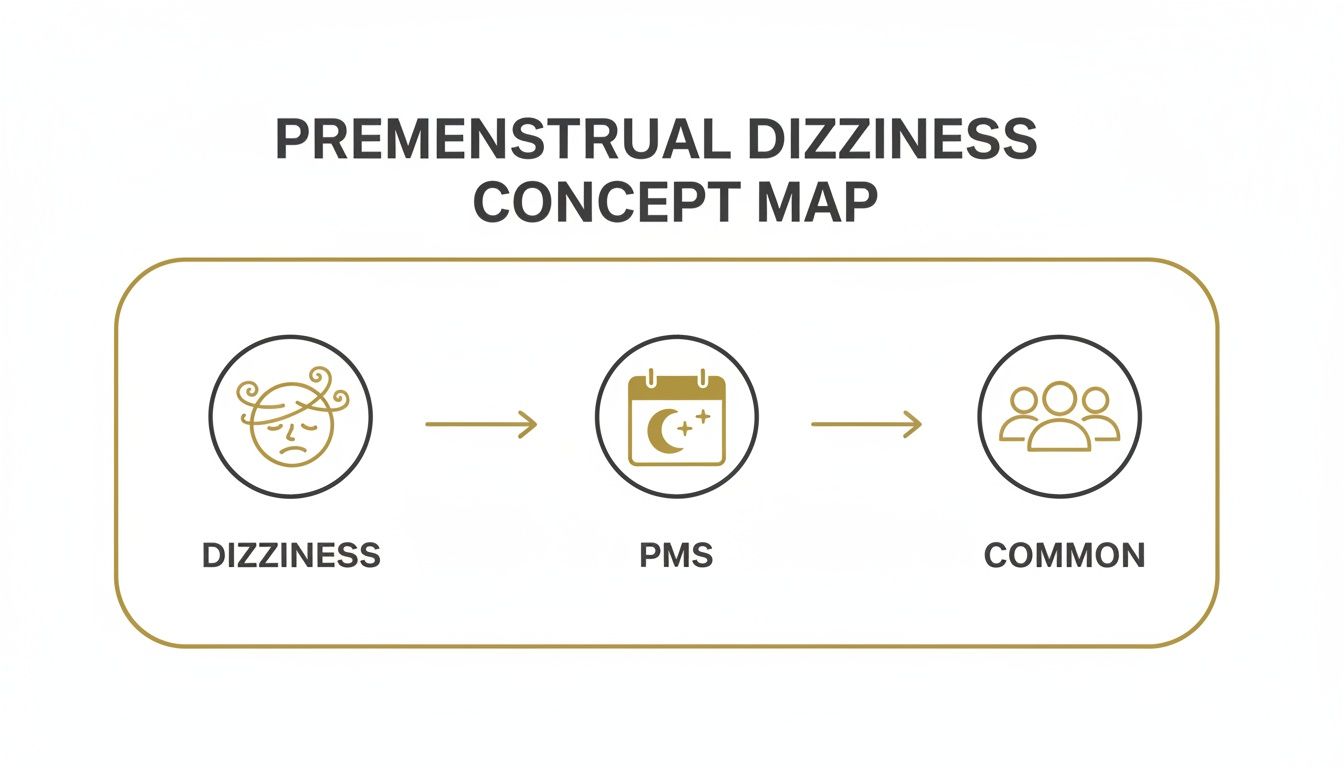
The primary takeaway is that feeling dizzy before your period is a recognised and common part of the menstrual cycle for many people.
To summarise, here is how these hormonal changes can contribute to feeling unsteady.
Hormonal Changes and Their Link to Dizziness
| Hormone | Change Before Period | Potential Effect Related to Dizziness |
|---|---|---|
| Oestrogen | Sharp decrease | Can cause blood vessels to be less stable, potentially leading to brief drops in blood pressure and light-headedness. |
| Progesterone | Sharp decrease | May lead to fluid and sodium retention, subtly affecting the inner ear's balance system and causing a sense of unsteadiness. |
The sharp decline in both hormones can create conditions that make feeling off-balance more likely just before your period begins.
Hormones and Headaches
For some people, this hormonal dip is also a primary trigger for menstrual migraines. Dizziness and vertigo are common symptoms that can accompany these intense headaches, sometimes appearing before the head pain starts.
If this pattern sounds familiar, our guide explaining the link between hormones and migraines may offer some useful insights.
In clinical settings, the timing of symptoms often provides the clearest clue. When dizziness consistently appears in the days before menstruation and resolves shortly after it begins, it strongly suggests a hormonal driver.
These natural hormonal shifts are frequently the root cause of feeling unsteady before your period. It is not necessarily a sign that something is wrong, but rather a reflection of your body adjusting to its own powerful, cyclical rhythm.
Common Factors That Worsen Premenstrual Dizziness
While hormonal shifts are often the primary driver of premenstrual dizziness, they rarely act alone. Other factors can interact with these changes, amplifying the symptoms. Understanding these contributors provides a fuller picture of why you might feel off-balance.

These factors do not typically cause dizziness on their own. Instead, they often combine with falling oestrogen and progesterone levels, intensifying the effects.
Fluctuating Blood Sugar
In the days before your period, hormonal changes can affect how your body uses insulin, which regulates blood sugar. This can lead to fluctuations in blood sugar levels, sometimes resulting in sudden dips, a condition known as hypoglycaemia.
The brain requires a constant supply of glucose to function correctly. When this supply drops, one of the first effects can be feeling light-headed, shaky, or weak, which can either cause dizziness or worsen existing symptoms.
Dehydration and Electrolyte Imbalance
It's a common paradox of the premenstrual phase: you might feel bloated from water retention, yet still be dehydrated at a cellular level. Hormonal changes can disrupt fluid regulation, upsetting the balance of electrolytes like sodium and potassium.
This imbalance can affect blood volume and nerve communication. Even mild dehydration can cause a drop in blood pressure, a classic trigger for light-headedness, especially upon standing.
The Role of Prostaglandins
Prostaglandins are hormone-like compounds that become active right before your period. Their primary function is to trigger uterine contractions, which are experienced as menstrual cramps. However, their effects are not always localised.
These compounds can enter the bloodstream and affect blood vessels throughout the body. If they cause blood vessels in the brain to dilate or constrict, it can lead to headaches and dizziness.
In clinical practice, when a patient reports intense period pains alongside dizziness, prostaglandins are often considered a contributing factor. This highlights how interconnected the body's systems are during this time.
Premenstrual Migraines
For many women, the sharp drop in oestrogen before a period is a major trigger for migraines. Dizziness and vertigo are well-known symptoms of a specific type called a vestibular migraine.
Sometimes, the dizziness can occur without the classic headache, making it difficult to identify the cause. If your premenstrual dizziness feels more like the room is spinning or your balance is severely affected, it could be related to migraine activity. Understanding these intersecting factors can help you and your healthcare professional find better ways to manage your symptoms.
Distinguishing PMS Dizziness from Other Conditions
When you discuss dizziness with a healthcare professional, one of their first goals is to identify a pattern. Does the dizziness appear consistently in the days before your period and disappear shortly after it starts? This predictable timing is often the strongest indicator that the symptom is linked to your menstrual cycle.
To get a clearer picture, your doctor may suggest tracking your symptoms for two or three consecutive months. A simple diary noting when the dizziness occurs and its severity can be very informative.
Identifying the Pattern
A symptom diary helps distinguish between what is likely a premenstrual symptom and what might be caused by another condition. Most other health issues that cause dizziness do not follow such a regular monthly pattern.
A clinician will also want to rule out other possibilities:
- Chronic Anaemia: Often caused by low iron or vitamin B12, anaemia can lead to persistent light-headedness, regardless of your menstrual cycle phase. A simple blood test can check for this.
- Inner Ear Disorders: Conditions like Benign Paroxysmal Positional Vertigo (BPPV) or labyrinthitis can trigger vertigo, but it is typically set off by specific head movements rather than hormonal cycles.
- Anxiety Disorders: While PMS can worsen anxiety, generalised anxiety may cause dizziness at any time, unrelated to your period.
How a Clinician Thinks
Healthcare professionals often approach dizziness by looking for clues that point toward either a cyclical or a chronic cause. They will likely ask specific questions to build a clear clinical picture.
"Does this dizziness occur at other times of the month?" "Do you notice it more when you stand up quickly?" "Is it a faint, light-headed feeling, or does it feel like the room is spinning?"
Your answers help narrow down the potential causes. Historically, it took time for these symptoms to be fully recognised. PMS began receiving serious medical attention in the 1980s, and its more severe form, PMDD, was officially recognised in 1994, which helped improve research and treatment approaches.
Understanding this diagnostic process can empower you to be a better advocate for your own health. A well-maintained symptom diary can transform a general complaint into specific, actionable information, helping both you and your doctor identify the root cause more efficiently.
Gentle Strategies for Managing Your Symptoms
Once you have identified a cyclical pattern to your dizziness, you can explore strategies to manage it. The goal is not to find an instant cure, but to support your body through its natural hormonal shifts with consistent, gentle self-care.

Small, consistent adjustments often yield the most significant results. The aim is to build a stable foundation that helps your body better navigate the hormonal fluctuations of the late luteal phase.
Stabilise Your Blood Sugar
Hormonal changes can disrupt blood sugar regulation, causing dips that lead to light-headedness. Instead of three large meals, consider eating smaller, more frequent meals or healthy snacks throughout the day.
This approach provides a steady supply of energy to your brain and body. Aim for balanced meals containing protein, healthy fats, and complex carbohydrates (like whole grains and vegetables) to avoid sharp energy spikes and subsequent crashes.
Focus on Hydration and Electrolytes
Proper hydration is always important, but it is particularly crucial in the days before your period when fluid balance can be disrupted. Even mild dehydration can reduce blood volume, potentially causing a drop in blood pressure and dizziness.
Sip water consistently throughout the day. In addition to water, ensure you are getting enough electrolytes, especially sodium and potassium, which regulate fluid levels. Potassium-rich foods include bananas, avocados, and sweet potatoes.
In clinical settings, we often see that simple lifestyle adjustments, particularly around diet and hydration, can significantly reduce the severity of premenstrual symptoms. It’s about supporting the body’s core functions when it’s under hormonal stress.
Consider Key Nutrients
Certain nutrients can play a supportive role in easing general PMS symptoms, which may indirectly help with dizziness.
- Magnesium: This mineral is important for nerve function and blood pressure regulation. Some research suggests it may help with PMS symptoms like headaches and fluid retention. It is found in leafy greens, nuts, and seeds.
- Vitamin B6: Involved in producing neurotransmitters like serotonin, this vitamin may help with mood and other PMS symptoms. It is present in chickpeas, poultry, and fish.
If you would like to learn more about how diet impacts hormonal health, you can explore our information on nutrition on our dedicated blog.
Gentle Movement and Stress Management
When you feel off-balance, high-intensity exercise may not be appealing. Gentle movement, such as walking or restorative yoga, can improve circulation and help you feel more grounded without overtaxing your system.
Stress management is equally important. The nervous system can be more sensitive before your period, so practices like deep breathing or mindfulness can help maintain calm and prevent adrenaline surges that might worsen dizziness.
When to See a Doctor About Your Dizziness
While premenstrual dizziness is often manageable, it is important to recognise when it is time to seek medical advice. You should not ignore symptoms that are severe, disruptive, or represent a change from your usual pattern.
A healthcare professional can help rule out other potential causes and ensure you receive appropriate care.
Red Flag Symptoms to Watch For
Certain symptoms warrant prompt medical attention. If your dizziness is sudden and severe, or if it is accompanied by any of the following, seek help immediately:
- Fainting or loss of consciousness
- Chest pain or a rapid, pounding heartbeat
- Shortness of breath
- Numbness or weakness on one side of your body
- A severe headache unlike any you have experienced before
These are not typical of PMS-related dizziness and require urgent evaluation to rule out more serious conditions.
When to Book a Routine Appointment
Beyond urgent symptoms, it is advisable to book a routine appointment if your dizziness consistently interferes with your daily life. If it affects your ability to work, drive, or care for yourself or others, it is time to speak with your doctor.
Also, take note if the dizziness begins to occur at other times in your cycle or becomes a constant issue. This can be a key indicator for clinicians that another condition may be involved. They may suggest further tests, such as a blood count test, to check for conditions like anaemia.
In the UK, dizziness before a period often falls under the umbrella of PMS, which affects a staggering 47.8% of women globally. But the story can be more complicated; for instance, conditions like PCOS, which affects around 10% of women in the UK, can make this kind of symptom much more likely. You can find more on these UK health statistics and their sources.
The purpose of this guidance is to be reassuring, but also to empower you to seek a proper diagnosis when your body signals that something needs a closer look.
This article aims to reduce confusion, but understanding your health is an ongoing process. For those who want to move beyond individual articles toward a more organised understanding, The Patients Guide offers structured, in-depth resources. Our guides are designed to help you connect the dots between symptoms, their causes, and effective management strategies.
Also in News


Blood Test Results Time: Your UK Guide
Get precise blood test results time info for the UK in 2026. Understand NHS turnaround, common delays, how to check your results, and when to contact your GP.
Read More


Headache Quick Remedy: Immediate Relief Guide
Headache quick remedy - Find a headache quick remedy that works. Our guide helps you understand your headache and choose safe, effective action for immediate
Read More


Mouth Ulcers Treatment: A Clear Guide
A calm, clear guide to mouth ulcers treatment. Learn about causes, self-care, OTC options, when to see a doctor, and how to prevent recurring ulcers.
Read More