






How to Recover from Whiplash: A Calm, Structured Guide


Searching for advice on how to recover from whiplash can be frustrating. You've likely found conflicting information, leaving you more uncertain than when you started. The hours and days after an injury are often filled with anxiety, which is only made worse when symptoms don't appear immediately.
It’s very common for the true pain and stiffness to set in a few hours, or even a day, later. This delay is a typical response to soft tissue injuries affecting the muscles and ligaments in your neck.
The sudden jolt from an accident causes tiny tears and overstretching. The body's inflammatory response, which brings on swelling and pain, takes time to develop. Understanding this process is the first step toward a calm and effective recovery. This article will explain how healthcare professionals approach whiplash, providing clarity rather than a list of quick tips.
Your First Steps After a Whiplash Injury
In the initial phase after a whiplash injury, the primary goal is simple: create the best possible environment for your body to begin its natural healing process. This isn't about miracle cures; it's about carefully avoiding activities that could aggravate the injury and further inflame sensitive tissues.
This foundational stage sets the tone for the rest of your recovery.
The Critical First 48 to 72 Hours
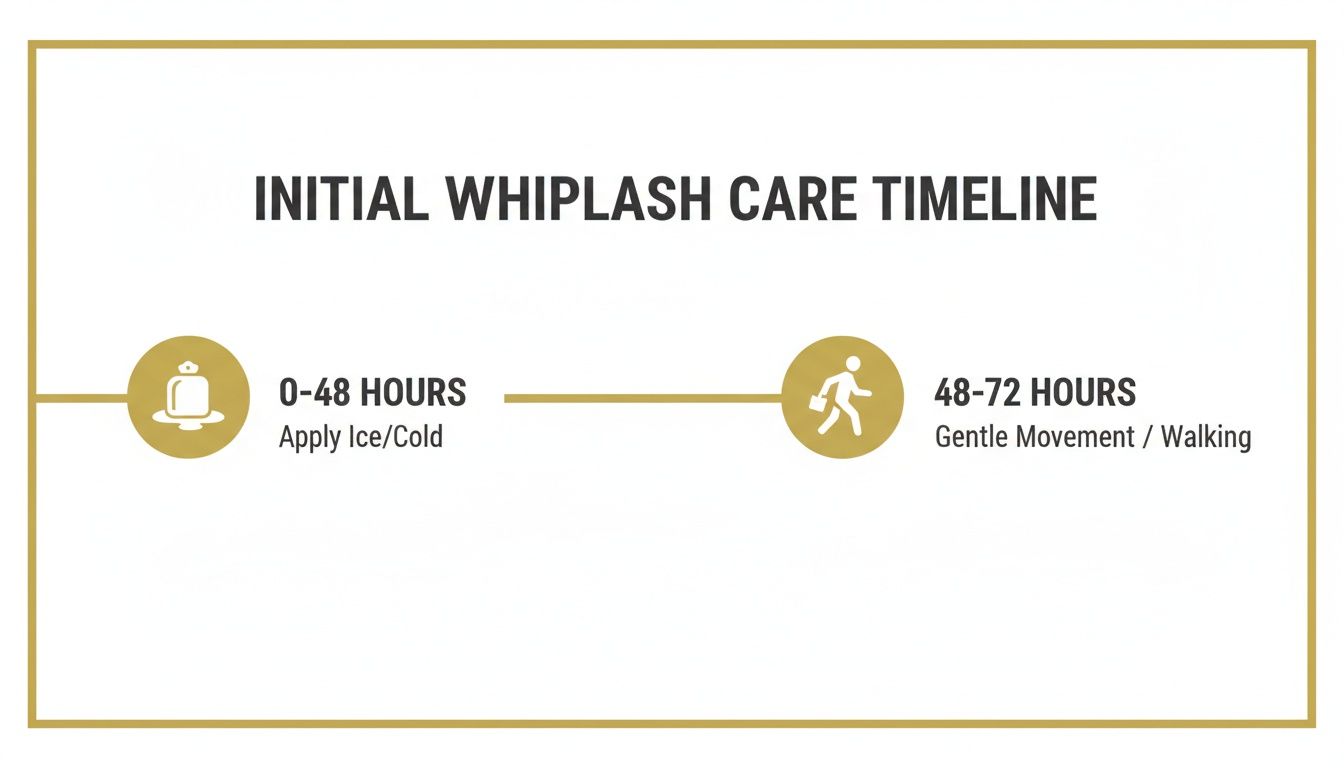
The advice from clinicians for this early period almost always centres on two key principles: managing inflammation and allowing for controlled rest.
- Controlled Rest: This does not mean staying completely still. It means avoiding activities that cause sharp pain or put significant strain on your neck, such as heavy lifting or sudden, jerky head movements. The goal is to protect injured tissues without letting them become overly stiff.
- Managing Inflammation: For the first couple of days, cold therapy is often recommended. Applying a cold pack (wrapped in a thin towel) to the sore areas for 15-20 minutes every few hours may help reduce swelling and provide a numbing effect that can improve comfort.
In clinical settings, a common observation is that people sometimes immobilise themselves too much. While protecting the neck is vital, gentle, pain-free movement is encouraged. This helps prevent muscles from seizing up, which can complicate the recovery process later on.
Setting Realistic Expectations for Healing
It is important to understand that most cases of whiplash tend to resolve well with time and appropriate care. Data from the UK's Official Injury Claim portal shows that for claims settled between October and December 2023, over 87% of straightforward whiplash cases were resolved within nine months, and more than 63% were settled in under six months. This suggests that the body is generally very capable of healing when given the right support.
This initial phase is about patience and listening to your body. The focus is on respecting the healing process, not pushing through pain. While many people can manage this stage on their own, our guide on treating whiplash at home offers more detailed self-care strategies.
By understanding why you are taking these first steps—to calm inflammation and protect your neck—you build a solid foundation. This puts you in control, shifting the focus from confusing advice toward a logical recovery plan.
Navigating Your Recovery Timeline and Symptoms
One of the main sources of anxiety after whiplash isn't just the pain; it's the uncertainty about what comes next. You may find yourself wondering if your symptoms are normal, how long they will last, and whether you are truly getting better. This uncertainty can be as draining as the physical symptoms.
Having a clear picture of a typical recovery can make a significant difference. It helps you see healing as a process with its own rhythm, complete with progress and temporary setbacks.
The Fluctuating Nature of Recovery
Whiplash recovery is rarely a smooth, upward line. It is perfectly normal to have good days where you feel almost back to yourself, followed by a day where you feel you’ve taken a step back. This is a common pattern in how soft tissues heal.
Something as simple as a poor night's sleep, a slightly more active day, or even stress can cause a temporary flare-up of symptoms. This does not mean you have undone your progress or re-injured yourself. It is simply your body responding as it repairs. Acknowledging this possibility from the outset can help manage frustration.
Understanding Common Associated Symptoms
Whiplash is more than just a sore neck. The injury can affect a complex network of muscles, nerves, and ligaments connecting your head to your upper back. As a result, a range of other symptoms often emerge.
It is common to experience a pattern of related issues, including:
- Headaches: Often starting at the base of the skull and radiating over the head, these are typically caused by tension in the injured neck muscles.
- Dizziness: The neck contains sensors that inform the brain about your head's position. When these are disrupted by an injury, it can lead to feelings of unsteadiness.
- Fatigue: Healing requires a significant amount of energy. It is not surprising to feel exhausted as your body works to repair damaged tissue.
- Shoulder or Upper Back Pain: The neck, shoulder, and upper back muscles work together. When one area is strained, others often tense up in response, leading to pain.
Because its effects are so varied and not always visible, people often refer to whiplash as an invisible injury. This can make the experience feel isolating, but understanding the wide range of possible symptoms is the first step in managing them.
The following table provides a general overview of the typical stages of whiplash recovery.
Typical Whiplash Recovery Phases and Focus
| Recovery Phase | Typical Timescale | Key Symptoms | Main Focus of Care |
|---|---|---|---|
| Acute Phase | 0 - 4 days | Peak pain, stiffness, inflammation, headaches. | Pain/inflammation control (ice, medication), relative rest, gentle range-of-motion. |
| Sub-Acute Phase | 4 days - 6 weeks | Aching, stiffness (especially in mornings), reduced range of motion. | Gentle mobility exercises, posture correction, introduction of light strengthening. |
| Late Stage (Remodelling) | 6 weeks - 3+ months | Lingering stiffness, muscle weakness, occasional flare-ups with activity. | Progressive strengthening, endurance training, return to normal activities. |
| Chronic Phase | Beyond 3 months | Persistent low-grade pain or stiffness, if recovery is incomplete. | Addressing underlying issues, functional rehabilitation, pain management strategies. |
This table is a general guide; everyone's recovery path is unique.
When to Seek Immediate Medical Advice
While most whiplash symptoms improve with time and care, certain "red flags" may indicate a more serious problem that requires immediate medical evaluation.
Healthcare professionals often advise patients to be mindful of their symptoms without becoming alarmed by every twinge. Knowing the difference between normal healing pains and a potential red flag allows you to act quickly and appropriately.
You should see a doctor or go to A&E immediately if you experience any of the following:
- Severe or escalating pain that is not relieved by over-the-counter painkillers.
- Numbness, tingling, or weakness that spreads down your arms or into your legs.
- Clumsiness or significant problems with balance and coordination.
- Any loss of bladder or bowel control.
- A severe headache unlike any you have experienced before.
These symptoms are rare, but it is essential to be aware of them. For most people, recovery is a straightforward, if sometimes frustrating, process. Understanding what to expect—from daily fluctuations to serious warning signs—can help you navigate your healing with more confidence and less worry.
Moving Beyond Rest with Gentle Mobility

After the first couple of days, the idea of moving your neck might seem counterintuitive. Our instinct is often to immobilise a painful area. However, with whiplash, this is where a gentle shift in approach is needed.
Keeping your neck completely still for too long can sometimes create more problems. Muscles can weaken, joints may stiffen, and recovery can stall. This is why the clinical approach shifts from initial rest to controlled, gentle motion once the most acute pain has subsided.
Distinguishing Between "Good" and "Bad" Pain
A common concern is whether movement will make the pain worse. This is a valid fear, which is why learning to listen to your body is so crucial. It’s important to understand the difference between the discomfort of healing and pain that signals potential harm.
Clinicians sometimes use a simple traffic light analogy to help guide patients:
- Green Light: A mild, dull stretch or a slight ache. This is generally considered safe and indicates that tight tissues are beginning to loosen.
- Amber Light: The pain sharpens or increases noticeably from your baseline discomfort. This is your body's signal to ease off for now.
- Red Light: A sharp, shooting, or radiating pain. This is a clear stop signal. You should back off immediately if you feel this.
The goal is to stay within the "green zone," gently exploring the boundaries of comfortable movement without pushing into pain. This approach is key to restoring your range of motion.
Bringing in the Heat
While the first 48 hours often involve cold packs to manage swelling, this is typically the time to switch to warmth. Applying a heat pack or taking a warm shower for 10-15 minutes before attempting gentle movements can be beneficial.
Heat increases blood flow, which helps relax tense muscles and makes them more pliable. This simple step can make initial movements feel more comfortable.
Foundational Gentle Mobility Exercises
Remember, the goal of these exercises is not to build strength yet. It is simply to reintroduce movement and prevent stiffness from setting in. Perform every movement slowly and with control, avoiding any sudden or jerky actions.
From a clinical perspective, the quality of movement is far more important than the quantity. A few slow, controlled repetitions are much better than a dozen rushed ones that cause pain.
Here are a few gentle movements to start with:
- Slow Head Turns: Sitting or standing with good posture, slowly turn your head to look over your right shoulder, going only as far as is comfortable. Pause briefly, then return to the centre. Repeat on the left.
- Gentle Nods (Chin Tucks): Looking straight ahead, gently tuck your chin toward your chest, as if creating a double chin. You should feel a light stretch at the back of your neck. Hold for a few seconds, then relax.
- Ear-to-Shoulder Tilts: Slowly and gently tilt your head, bringing your right ear toward your right shoulder without forcing it. Return to the starting position and repeat on the other side.
Start with just a few repetitions of each, perhaps twice a day. As you feel more comfortable, you can gradually increase the number. For a more comprehensive list, our guide on exercises for neck pain relief offers structured examples.
This phase is about re-teaching your brain and body that movement is safe. These small, consistent efforts build the foundation for regaining strength and returning to your normal activities.
The Role of Professional Guidance in Your Recovery
While self-care with gentle movement and rest is a positive start, there often comes a time when an expert opinion is the best path forward. This is especially true if your symptoms are lingering, not improving as expected, or if you simply want the reassurance of a structured, professional plan.
Seeking professional help is a proactive step toward a full and confident recovery. A qualified clinician can provide a proper diagnosis, rule out more serious issues, and create a treatment plan tailored to your specific needs.
What Professional Care Looks Like
A visit to a healthcare professional, such as a GP or physiotherapist, will begin with a detailed conversation. They will want to understand the circumstances of your injury, the nature of your symptoms, and how it is affecting your daily life.
This is typically followed by a physical examination. This may involve assessing your neck's range of motion, testing your muscle strength, and performing simple neurological checks. This process helps them build a clear picture of how the injury has affected you and what areas require attention.
Physiotherapy: A Structured Approach to Healing
For many people navigating a whiplash injury, physiotherapy can be instrumental. A physiotherapist does more than provide an exercise sheet; they develop a comprehensive, structured programme to restore your neck's function and help prevent future problems.
Their methods commonly include:
- Pain Management Techniques: Using modalities like heat or cold packs, and sometimes ultrasound, to help soothe pain and calm inflammation in the early stages.
- Manual Therapy: This involves hands-on, targeted techniques to ease stiffness in the joints of your neck and upper back and release tension in tight muscles.
- Progressive Strengthening: You will be guided through specific exercises designed to rebuild strength in the deep stabilising muscles of your neck, as well as the larger supporting muscles across your shoulders and upper back.
In clinical practice, the goal of physiotherapy extends beyond pain relief. It aims to restore your confidence in movement. A well-designed exercise plan empowers you by demonstrating what your neck is capable of, which is crucial for breaking the cycle of fear and pain.
This expert guidance helps ensure you are doing the right things at the right time, safely encouraging your body to recover without causing a flare-up.
If your whiplash was the result of an accident that wasn't your fault, managing the legal aspects can feel like an additional burden. Understanding how to go about choosing a personal injury attorney can be a vital step. While a clinician manages your physical recovery, a legal expert can handle external stressors and ensure you are properly supported.
Understanding Your Treatment Options
It is important to know that there is no single "magic bullet" for whiplash. An effective treatment plan is always tailored to the individual. What works for one person might not be the right approach for another, which is why a professional assessment is so critical.
Your recovery plan might be heavily focused on exercise, or it could be a blend of different therapies. For instance, a physiotherapist might use manual therapy to improve joint movement, which then makes it easier and less painful for you to perform strengthening exercises. Your GP might also recommend medications like anti-inflammatories to help manage initial pain and swelling.
The key is that all parts of your treatment should work together toward the same goals: less pain, better movement, and a safe return to your normal activities.
Getting Back to Normal and Long-Term Neck Health
The ultimate goal of this recovery journey is to return to your normal life, but this final phase requires a strategic approach. The key is to ease back into your routine carefully, a process clinicians often call graded exposure. This simply means slowly and steadily increasing your activity levels to give your neck tissues time to adapt.

This gradual re-entry applies to everything—from household chores and returning to the gym to your first day back at work. A common mistake is trying to do too much, too soon. This can lead to a painful flare-up, which can feel incredibly discouraging. Remember, this is about steady progress, not a sprint to the finish line.
How to Pace Yourself and Handle Flare-Ups
As you start to do more, it is normal to have "off" days where your neck feels more sensitive. This is part of the healing process and does not mean you are back at square one. Knowing how to handle these moments is important.
If you feel a flare-up developing, the first rule is not to panic. Simply ease off slightly. Scale back your activities to a manageable level for a day or two. It can also be helpful to revisit early-stage comforts, like using a heat pack to calm tense muscles.
From years of clinical experience, flare-ups can be seen as learning opportunities, not failures. They provide useful feedback about your body's current limits. Use that information to fine-tune your pacing and build a more realistic recovery plan.
This mindset puts you back in control. It's just a temporary adjustment to the plan, not a full retreat.
Make Your Environment More Neck-Friendly
A whiplash injury often makes you more aware of how your environment affects your neck. Making a few simple, practical changes can dramatically reduce the daily strain on healing tissues.
Consider these small ergonomic tweaks:
- Your Desk Setup: Your computer monitor should be positioned so the top of the screen is roughly at eye level. This simple adjustment helps prevent slouching. A chair with good lumbar support also supports better posture.
- In the Car: Check your headrest. The middle of it should align with the top of your ears to ensure it is in the correct protective position.
- Lifting: Always bend at your knees, not your waist. Keep the item close to your body and engage your stomach muscles. This allows your stronger leg and core muscles to do the work, taking pressure off your neck.
These are not major changes, but their cumulative effect can reduce the constant, low-level stress on your neck, giving it a better chance to heal properly.
Building a Resilient Neck for the Future
Once the pain has settled and you are moving more freely, the focus can shift from recovery to prevention. The goal becomes building a stronger, more resilient neck that is better equipped to handle daily stresses.
This doesn't require an intensive gym routine. It's more about being consistent with simple exercises that support good posture and muscle health. The same chin tucks and gentle stretches from the beginning are excellent for long-term neck maintenance.
The aim is to lock in the progress you have made. Strong, flexible neck muscles are your body’s natural defence system, providing crucial support for your head and spine. By taking these proactive steps, you not only recover from whiplash but also gain the knowledge to look after your neck for years to come.
Your Whiplash Recovery Questions Answered
When you're dealing with an injury like whiplash, it's natural to have questions. Sifting through online advice can be overwhelming, and it’s often hard to know what to trust. Here are straightforward answers to some of the most common queries.
How Long Should I Take Off Work After a Whiplash Injury?
The answer depends on the severity of your injury and the nature of your job.
If you have a desk job, you might feel able to return within a few days, perhaps with adjustments to your chair or screen height. However, if your job involves heavy lifting or constant neck turning, you will likely need more time for your neck to heal properly.
The best approach is often to avoid being off work for an extended period if possible, as returning to a normal routine can be a positive part of recovery. Speak with your GP or physiotherapist; they can help you determine a sensible timeline and may suggest a phased return to work.
Should I Use a Soft Cervical Collar?
This is a common question, but the routine use of soft collars is now less frequently recommended. While a collar might feel comforting for the first 24-48 hours, wearing one for longer can sometimes do more harm than good.
The reasoning is that immobilising the neck for too long can cause the supporting muscles to weaken and the joints to stiffen, potentially slowing down recovery. The modern, evidence-based approach encourages early, gentle movement rather than prolonged rigidity. Always follow the advice of your healthcare professional for your specific situation.
Is It Normal to Feel Dizzy or Have Headaches?
Yes, it is very common for whiplash to cause more than just neck pain. Many people experience headaches that seem to start at the base of the skull, known as cervicogenic headaches.
Feeling dizzy or slightly off-balance is also a frequent symptom. This often occurs because the injury has disrupted the delicate network of nerves in the neck that contribute to your sense of balance. While these symptoms are usually not a cause for alarm, you should mention them to your doctor so they can provide appropriate advice and rule out other issues.
When Should I See a Doctor for Whiplash?
As a general rule, if you have been in an accident and suspect you have whiplash, it is a good idea to get checked out. A proper diagnosis from the start ensures you know what you are dealing with.
It is particularly important to see a professional if you notice any 'red flag' symptoms. This includes severe, unrelenting pain, any numbness or weakness spreading into your arms or legs, or significant problems with your coordination. A clinician can assess you properly and help you start on a recovery plan that is right for you.
This guide was designed to provide a clear, structured understanding of the whiplash recovery journey. While articles like this are a helpful starting point, they have their limits. For those looking for a comprehensive, step-by-step plan, we have developed a detailed resource specifically for whiplash.
You can learn more and get structured support for your recovery at https://www.thepatientsguide.co.uk.
Also in Whiplash


How to Sleep With Whiplash: A Guide to Supporting Your Neck for Better Recovery
Learn how to sleep with whiplash with clinician-backed tips on pillow support, positions, and gentle relief for faster recovery.
Read More


Understanding Whiplash Injury Recovery Time
A clear guide to whiplash injury recovery time. Understand the typical healing phases, key factors influencing your progress, and proven management strategies.
Read More


A Calm Guide to Treating Whiplash at Home
Feeling overwhelmed by neck pain after an injury? This is a calm, clear guide to treating whiplash at home, focusing on safe pain relief and recovery.
Read More