






Understanding the Best Foods for Athletes: A Performance Nutrition Guide


Searching for the best foods for athletes often leads to a maze of conflicting advice. One source may promote high-fat diets, another might insist on carbohydrate loading, and countless products claim to be the ultimate performance fuel. This can be a frustrating experience, particularly when you are responsible for your own performance or that of a young athlete dealing with the demands of training, competition, and recovery. The sheer volume of information can feel overwhelming, making it difficult to know what advice is trustworthy.
This article is not another list of trendy 'superfoods' or quick fixes. Instead, it is designed to explain the principles healthcare professionals and nutritionists use when recommending foods for athletic performance. We will explore key food groups that consistently support energy, muscle repair, and overall health. The goal is to reduce confusion and provide a clear, sustainable framework for making informed decisions. By understanding the 'why' behind each recommendation, you can build a nutritional strategy grounded in established science, not passing trends. To further explore the specific dietary choices that can significantly impact training and competition, consider a detailed guide on the best foods for athletic performance which offers a structured overview.
1. Eggs
Eggs are a nutritional cornerstone for athletes, often regarded as a gold standard for protein quality. They provide a complete protein source, meaning they contain all nine essential amino acids required for muscle protein synthesis. This makes them a highly effective food for athletes focused on muscle repair and growth after strenuous training sessions.

Beyond muscle recovery, the yolk is rich in vital nutrients often overlooked. It contains choline, a compound important for brain health and neuromuscular function, which may support reaction time and coordination. Eggs also provide lutein and zeaxanthin, antioxidants that support eye health, and vitamin D, which is essential for bone health and immune function. Their affordability and culinary versatility make them an accessible and practical choice for athletes at every level.
How this applies to athletes
- Timing: For optimal muscle recovery, consuming 2-3 eggs within the 30-60 minute window following a workout or competition is a common recommendation.
- Meal Ideas: Combine scrambled or poached eggs with whole-grain toast and avocado for a balanced recovery meal. For a quick pre-prepared option, hard-boiled eggs are an excellent portable snack.
- Nutrient Tip: The yolk contains nearly half the protein and most of the essential vitamins and minerals. Discarding it significantly reduces the egg's nutritional benefits for performance and overall health.
2. Salmon and Fatty Fish (Omega-3 Sources)
Fatty fish like salmon, mackerel, and sardines are critical components of an athlete's diet due to their high concentration of omega-3 fatty acids, specifically EPA and DHA. These compounds are known for their anti-inflammatory properties, which can help mitigate exercise-induced muscle damage and reduce joint soreness. This makes them a valuable food for athletes managing the physical stress of intense training or recovering from inflammatory injuries.
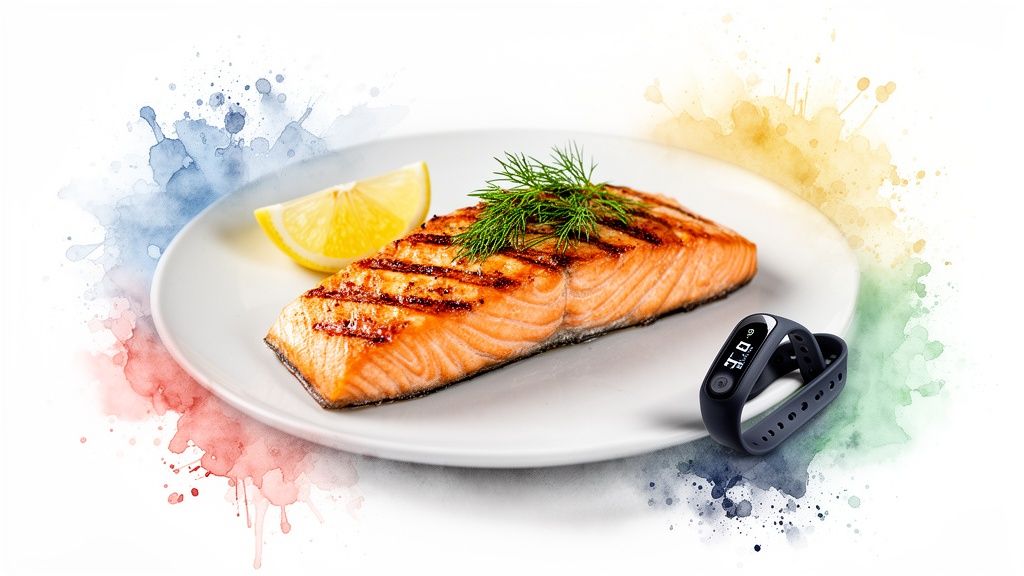
Beyond inflammation control, omega-3s are vital for cardiovascular and brain health, supporting efficient oxygen delivery and cognitive function under pressure. For example, consistent intake is often recommended for youth athletes in contact sports to support brain health. These fish also provide high-quality protein for muscle repair and are a natural source of vitamin D, which is essential for bone density and immune function. You can explore the role of omega-3s in more detail in various guides on patient health.
How this applies to athletes
- Timing: Consume fatty fish as part of a main meal on recovery days to help reduce systemic inflammation. It is not typically timed immediately pre- or post-workout.
- Meal Ideas: A grilled salmon fillet with quinoa and steamed broccoli makes for a nutrient-dense recovery dinner. Canned sardines or mackerel on whole-grain crackers offer a convenient and cost-effective lunch or snack.
- Nutrient Tip: A common guideline is to aim for at least two servings (around 140-150g per serving) of fatty fish per week. To minimise potential mercury exposure, prioritising smaller fish like salmon, sardines, and anchovies is often advised. Baking or grilling tends to preserve the delicate omega-3 fats better than frying.
3. Greek Yogurt
Greek yogurt is a dense, high-protein food that offers significant benefits for athletic recovery and overall health. It typically provides a combination of both whey and casein proteins. This dual-protein profile can ensure a fast-acting supply of amino acids for immediate muscle repair (whey), followed by a slower, more sustained release to prevent muscle breakdown over several hours (casein). This makes it a useful food for athletes aiming for comprehensive muscle maintenance.
Beyond protein, many Greek yogurts contain live active cultures (probiotics) that support gut health, which is important for efficient nutrient absorption and a strong immune system. It is also an excellent source of calcium, a mineral vital for bone density and proper muscle contraction. This is particularly relevant for young athletes building their skeletal framework and for endurance athletes who may be at higher risk for stress fractures.
How this applies to athletes
- Timing: Consuming a serving within the 30-60 minute post-exercise window can help capitalise on its whey protein content for rapid muscle repair initiation.
- Meal Ideas: Create a balanced recovery bowl by combining plain Greek yogurt with berries for carbohydrates and antioxidants, plus a handful of nuts for healthy fats. For a liquid meal, it can be used as a creamy, protein-rich base for smoothies.
- Nutrient Tip: Opting for plain, unsweetened varieties helps avoid added sugars that can hinder recovery. Checking the label for "live and active cultures" ensures you get the potential probiotic benefit.
4. Sweet Potatoes & Whole Grains (Complex Carbohydrates)
Complex carbohydrates like sweet potatoes and whole grains are fundamental fuel sources for many athletes. They provide the sustained, slow-release energy often required to power through long training sessions and competitions. Unlike simple sugars that can cause energy spikes and crashes, these foods help replenish muscle glycogen stores efficiently, ensuring energy is available when it’s needed most. This makes them a key food for athletes focused on endurance and consistent performance.
Sweet potatoes are packed with beta-carotene, vitamin C, potassium, and manganese, supporting immune function, electrolyte balance, and bone health. Whole grains such as oats, quinoa, and brown rice contribute essential B vitamins for energy metabolism and fibre for digestive health. Quinoa is particularly noteworthy as it offers a complete protein, which is rare for a plant-based food. Together, they form a powerful combination for fuelling performance and aiding recovery.
How this applies to athletes
- Timing: Consume a serving of sweet potato or whole grains 2-3 hours before a workout for sustained energy. For recovery, a portion within 60 minutes post-exercise, ideally paired with a lean protein source, is often recommended.
- Meal Ideas: A baked sweet potato with grilled chicken or fish makes for a solid recovery meal. For a pre-training breakfast, oatmeal with berries and nuts is a common choice. Young athletes, in particular, can benefit from well-timed complex carbs; you can learn more about nutrition for young athletes to optimise their fuelling strategy.
- Nutrient Tip: Choosing whole forms, like steel-cut oats over instant varieties, can maximise fibre and nutrient content. When preparing sweet potatoes, leaving the skin on where possible helps retain valuable fibre and minerals.
5. Berries (Blueberries, Raspberries, Strawberries)
Berries are micronutrient-dense foods for athletes, packed with antioxidants and anti-inflammatory compounds. They contain polyphenols like anthocyanins, which are responsible for their rich colours and are thought to play a role in reducing exercise-induced inflammation and oxidative stress. This suggests berries may be a useful food for athletes looking to support recovery, joint health, and protect their bodies from the strain of intense training.

Beyond general recovery, certain berries may offer specialised benefits. Blueberries, for instance, have been studied for their neuroprotective properties, which may support cognitive function and are increasingly considered in nutritional protocols for concussion recovery. The natural sugars in all berries also provide a readily available source of energy, helping to replenish depleted glycogen stores after a hard workout.
How this applies to athletes
- Timing: Consuming a serving of mixed berries within the 30-60 minute post-exercise window may help with their anti-inflammatory and glycogen-restoring benefits.
- Meal Ideas: Blend frozen berries into a post-workout smoothie with protein powder and milk, or stir a cup of fresh berries into Greek yoghurt or oatmeal for a balanced and nutrient-dense recovery meal.
- Nutrient Tip: Opting for frozen berries when fresh are out of season is a practical choice. They are often frozen at peak ripeness, preserving their nutrient content, and can be a more cost-effective way to maintain a consistent daily intake.
6. Lean Chicken and Turkey
Lean poultry like chicken and turkey are foundational protein sources for athletes, valued for their high protein-to-fat ratio. They provide a complete amino acid profile essential for repairing muscle fibres broken down during intense activity, making them an effective food for athletes focused on efficient recovery and building lean mass. This makes lean poultry a suitable choice for supporting consistent training gains without adding excess calories.
Beyond muscle synthesis, chicken and turkey are rich in B vitamins, particularly niacin (B3) and pyridoxine (B6). These micronutrients are crucial for energy metabolism, helping the body convert food into usable fuel. Furthermore, B vitamins support nervous system function, an important consideration for athletes in any sport. Their high protein content also promotes satiety, helping athletes manage body composition effectively.
How this applies to athletes
- Timing: Consuming a 100-120 gram portion (providing 25-30g of protein) within two hours post-exercise is a common strategy to maximise muscle protein synthesis.
- Meal Ideas: Pair grilled chicken breast with roasted sweet potatoes and green beans for a balanced recovery meal. Shredded turkey can be added to wholewheat wraps with salad for a convenient, high-protein lunch.
- Nutrient Tip: Choosing skinless, white meat cuts like the breast provides the lowest fat content. Preparing it by grilling, baking, or poaching helps preserve its lean nutritional profile compared to frying. Batch-cooking portions can be an effective meal prep strategy for busy athletes.
7. Nuts and Seeds (Almonds, Walnuts, Chia, Flax)
Nuts and seeds are nutrient-dense foods, offering a convenient source of plant-based protein, healthy fats, and essential micronutrients. Their portability and sustained energy release make them a practical food for athletes needing consistent fuel. Different varieties provide unique benefits; for example, walnuts, flax, and chia seeds are rich in alpha-linolenic acid (ALA), a plant-based omega-3 fatty acid that helps to manage inflammation.
Beyond healthy fats, almonds deliver bone-supporting calcium and magnesium, which is important for muscle contraction and energy production. The combination of fibre, protein, and fat in nuts and seeds promotes satiety, helping athletes manage their weight and avoid less healthy snacking. For those in recovery, the anti-inflammatory properties of the omega-3s in walnuts and flaxseeds can be particularly useful.
How this applies to athletes
- Timing: A small handful (around 30 grams) can be consumed as a pre-training snack for sustained energy or post-training to support recovery.
- Meal Ideas: Add a tablespoon of ground flaxseed or chia seeds to smoothies, yoghurt, or porridge. A mix of almonds and walnuts makes an excellent portable snack for travelling to competitions.
- Nutrient Tip: To improve the absorption of their nutrients, it's often best to grind seeds like flax and chia before eating. Choosing raw or dry-roasted nuts and seeds without added oils, sugar, or excessive salt is generally recommended.
8. Bone Broth
Bone broth is a nutrient-dense liquid that has become popular among athletes for its potential role in supporting tissue and joint health. Made by simmering animal bones and connective tissues for an extended period, it extracts compounds like collagen, gelatin, and amino acids such as glycine and proline. This makes it a food of interest for athletes, particularly those focused on recovering from injuries or managing the high-impact stress of their sport.
The collagen and amino acids in bone broth provide foundational building blocks for repairing connective tissues, including tendons, ligaments, and cartilage. For athletes dealing with overuse injuries, joint pain, or recovering from surgery, incorporating bone broth may offer targeted nutritional support that aids tissue regeneration and helps maintain gut barrier integrity, which is important for nutrient absorption.
How this applies to athletes
- Timing: For injury recovery support, some protocols suggest 1-2 cups (around 250-500 ml) daily. For general joint maintenance, a few servings per week may be beneficial.
- Meal Ideas: Use bone broth as a base for soups and stews, cook rice or quinoa in it instead of water, or simply warm and drink it on its own. While it supports recovery, you can learn more about how to improve bone density naturally with a broader dietary approach.
- Nutrient Tip: For higher quality, bones from grass-fed, pasture-raised animals are often recommended. Simmering for 12-24 hours is thought to maximise the extraction of collagen and minerals. You can prepare large batches and freeze them in portions for convenience.
9. Leafy Greens (Spinach, Kale, Collards)
Leafy greens are often celebrated for general health, but they are also a key component of an optimised athletic diet. These vegetables are dense in micronutrients like iron, calcium, magnesium, and vitamins K, A, and C, all of which are important for energy metabolism, injury recovery, and overall physiological function. For athletes, these nutrients provide foundational support that underpins performance.
The benefits extend beyond basic vitamins. Greens like spinach contain natural nitrates, which the body can convert to nitric oxide. This process may enhance blood flow and oxygen delivery to working muscles, potentially improving endurance. Furthermore, Vitamin K, abundant in kale and collards, is essential for bone health. This is particularly relevant for athletes in high-impact sports, aiding in the prevention and recovery of stress fractures. Leafy greens are therefore a key food for athletes seeking to build resilience.
How this applies to athletes
- Timing: Leafy greens can be consumed at any meal to boost nutrient intake. Including them in a post-workout meal or smoothie helps replenish lost minerals and provides antioxidants.
- Meal Ideas: Blend a large handful of spinach or kale into a post-workout smoothie with fruit and protein powder; the flavour is easily masked. Sauté collard greens with garlic and olive oil as a side dish, or use large kale leaves as a wrap for lean protein.
- Nutrient Tip: To maximise the absorption of non-heme iron, a mineral vital for oxygen transport, pairing leafy greens with a source of vitamin C is effective. Squeezing lemon juice over a salad or adding berries to a green smoothie are simple ways to achieve this.
10. Tart Cherry Juice
Tart cherry juice is a recovery tool used by many athletes, valued for its high concentration of anti-inflammatory compounds. It contains anthocyanins and other polyphenols, which research has shown may reduce muscle soreness and inflammation. This makes it a useful beverage for athletes looking to support recovery after intense training or competition, allowing for more consistent performance.
Beyond muscle recovery, tart cherry juice is a natural source of melatonin, a hormone that regulates the sleep-wake cycle. Quality sleep is a non-negotiable component of athletic recovery and tissue repair. By potentially improving sleep quality, tart cherry juice may offer a dual-action approach to recovery, helping athletes manage physical stress while also promoting essential restorative processes.
How this applies to athletes
- Timing: To help reduce delayed-onset muscle soreness (DOMS), some studies suggest consuming 250-350ml (approx. 8-12 oz) within 60 minutes after an intense workout. To leverage its melatonin content, drinking a serving 30-60 minutes before bed is a common practice.
- Meal Ideas: Blend tart cherry juice into a post-workout smoothie with protein powder and a banana. For a simple recovery drink, dilute the concentrated juice with water or sparkling water.
- Nutrient Tip: Choosing 100% unsweetened tart cherry juice, not a sweetened cherry cocktail, is recommended. Look for brands that explicitly state "no added sugar" to avoid unnecessary calories and ensure you receive the maximum potential benefits.
A Summary of Key Foods for Athletes
| Item | Primary Role | Implementation | Ideal Use Cases | Key Advantages |
|---|---|---|---|---|
| Eggs | Muscle Repair & Brain Health | Low (quick cook) | Post-workout recovery; concussion nutrition | Complete protein, versatile, affordable |
| Salmon & Fatty Fish | Inflammation Reduction | Medium (cook or canned) | Recovery days; concussion recovery; endurance sports | High EPA/DHA omega-3s, vitamin D |
| Greek Yogurt | Sustained Muscle Repair | Low (ready-to-eat) | Post-workout snack; calcium support | Dual protein (whey/casein), probiotics |
| Sweet Potatoes & Whole Grains | Sustained Energy | Medium (cooking required) | Pre-training fuel; glycogen replenishment | Low-GI carbs, antioxidants, fibre |
| Berries | Antioxidant Support | Very low (ready-to-eat) | Post-workout recovery; concussion neuroprotection | High polyphenols, low calorie, convenient |
| Lean Chicken & Turkey | Lean Muscle Building | Medium (cook) | Post-workout meals; body composition goals | Lean complete protein, high B vitamins |
| Nuts and Seeds | Healthy Fats & Micronutrients | Very low (ready-to-eat) | On-the-go snack; anti-inflammatory support | Portable healthy fats, magnesium, ALA |
| Bone Broth | Connective Tissue Support | High (if homemade) | Injury recovery; joint health maintenance | Rich in collagen, glycine, proline |
| Leafy Greens | Micronutrient Foundation | Low (wash/prepare) | Daily meals; bone health support; recovery smoothies | High vitamins K/A/C, minerals, nitrates |
| Tart Cherry Juice | Recovery & Sleep Support | Very low (ready-to-drink) | Post-intense training; DOMS reduction | Backed for soreness reduction, natural melatonin |
From Information to a Structured Plan
Navigating sports nutrition can feel complex, with conflicting advice and endless lists of "superfoods". The goal of this article has been to move beyond simple recommendations and explain the functional roles that specific foods play in an athlete's performance, recovery, and overall health. We have explored how items like salmon provide anti-inflammatory omega-3s, how complex carbohydrates from sweet potatoes sustain energy, and how tart cherry juice may aid muscle recovery.
Understanding these mechanisms is the first step towards building an effective nutritional strategy. It allows you to see food not just as calories, but as functional tools. Protein sources like eggs and lean chicken are for tissue repair, antioxidant-rich berries help manage oxidative stress, and electrolytes from bone broth support hydration and nerve function. The consistent theme is that a well-rounded intake, timed appropriately, is fundamental to athletic success.
Core Principles for Sustainable Performance
The most important takeaway is not to memorise a list of ten foods, but to internalise the principles behind their inclusion. An effective diet for an athlete is built on three core pillars:
- Consistent Fuelling: Providing the body with the right carbohydrates before training and replenishing glycogen stores afterwards is crucial for sustained energy.
- Targeted Repair: Consuming adequate high-quality protein after exercise is non-negotiable for repairing muscle damage and promoting adaptation.
- Systemic Support: Micronutrients, healthy fats, and antioxidants from sources like leafy greens, nuts, and berries are essential for reducing inflammation and supporting immune function.
Applying These Concepts Long-Term
Mastering these concepts transforms your approach from reactive eating to proactive fuelling. It allows you to adapt your nutrition based on your training load, competition schedule, and how your body feels. Instead of simply following a generic meal plan, you can begin to make informed decisions that are tailored to your unique physiology and sport-specific demands. This level of understanding empowers you to build resilience and optimise recovery.
While articles provide a strong foundation for understanding the 'why' behind the best foods for athletes, integrating this knowledge into a cohesive, personalised plan is often the next challenge. Online resources have their limits, and putting the pieces together can feel overwhelming. Real progress often comes from a structured approach that connects these individual food-based concepts into a sustainable, long-term strategy.
For those who want to go beyond individual articles and develop a more comprehensive framework for their health, The Patients Guide offers structured resources to connect these concepts. Our in-depth materials help you build a sustainable plan with clarity and confidence. Explore our resources at The Patients Guide to take the next step.
Also in Nutrition


A Patient's Guide to the B12 Blood Test
A clear guide to the B12 blood test. Understand why it's done, what the results mean, and what your next steps are in your health journey.
Read More


8 Calming Acid Reflux Recipes to Settle Your Stomach
Searching for acid reflux recipes that won't cause discomfort? Explore 8 gentle, clinician-informed meal ideas designed to calm and nourish your system.
Read More


Does Milk Help Heartburn? A Clear Guide to a Confusing Question
Does milk help heartburn? Learn the science behind relief, rebound effects, and safer alternatives—does milk help heartburn explained.
Read More