






Nutrition for Young Athletes: A Practical Guide


Searching for reliable advice on nutrition for young athletes can be a confusing experience. One website recommends a specific diet, a coach suggests another, and soon you are left with conflicting information, uncertain about what your child truly needs to perform and grow.
Many parents find themselves in this position. You may feel caught between highly restrictive meal plans and the marketing claims of performance-enhancing supplements. The sheer volume of advice can be overwhelming.
This guide aims to provide clarity. Instead of focusing on rigid rules or quick fixes, we will explain the principles that sports nutrition professionals use when considering fuel for a growing, active body.
We will begin with the fundamentals that support both athletic performance and long-term health. From there, we will cover practical strategies for meals, snacks, and hydration. The goal is to help you make informed choices for your young athlete, without the hype or confusion.
For a broader perspective on building healthy eating habits, you can find other articles on general nutrition here.
Why Young Athletes Have Unique Energy Demands
A young athlete's body is managing two significant tasks at once. It is not only fuelling training sessions and competitions but is also building bone, growing muscle, and navigating the hormonal changes of puberty. This dual demand creates unique metabolic requirements.
This means their energy needs are often much higher than those of their non-athletic peers. A common mistake is to view them as smaller versions of adult athletes or to simply scale down an adult's diet. Their bodies are undergoing different processes with different priorities.
The key is to consider the total energy cost of their sport, their growth, and their daily life. Understanding this cumulative energy requirement is the first step in developing a nutrition plan that supports them effectively.
The Cost of Growth and Sport
Energy, measured in calories, is what the body uses to perform its functions. For a young athlete, there are three main areas where this energy is spent each day:
- Basal Metabolic Rate (BMR): This is the baseline energy required to maintain essential functions like breathing, circulation, and organ function, even at rest.
- Physical Activity: This covers all movement, from walking to class to high-intensity training. It is often the most variable part of their energy expenditure.
- Growth and Development: This is a significant and non-negotiable energy cost. The body requires a consistent energy surplus to build new tissues, lengthen bones, and manage the hormonal shifts of adolescence.
When energy intake is not sufficient to cover all three of these costs, the body may have to compromise. Often, growth and recovery are the first functions to be deprioritised, even if athletic performance seems stable for a time.
Quantifying the Increased Need
The energy difference between a young athlete and their more sedentary friends can be substantial. This demand tends to increase as they get older, grow larger, and participate in more competitive sports.
For example, research on players in UK Premier League football academies shows a clear increase in energy needs with age. U12/U13 players may require around 2,859 kcal per day, which climbs to 3,029 kcal for U15 players. By the U18 level, their daily requirement can reach 3,586 kcal.
On average, these academy football players use about 750 more calories each day than boys of the same age who are not involved in elite sports. This highlights the significant energy cost of combining intensive training with the demands of a growing body. You can explore more about the caloric needs of youth athletes here.
This data clarifies why general healthy eating advice may not be sufficient. A diet that is adequate for a moderately active teenager will likely leave a dedicated young athlete with an energy deficit.
Observing Signs of Energy Balance
Achieving the right energy balance is less about meticulous calorie counting and more about recognising patterns and signs. When a young athlete is getting enough fuel, you will likely see consistent progress in their sport and their overall development.
Positive indicators of sufficient energy intake may include:
- Steady growth in height and weight that follows their expected growth curve.
- Consistent energy levels for both training and school activities.
- Good recovery between training sessions and competitions.
- A robust immune system, resulting in fewer minor illnesses.
Conversely, an energy deficit can manifest in subtle ways. Be aware of persistent tiredness, difficulty concentrating in school, minor injuries that are slow to heal, or a plateau in both growth and athletic performance. Noticing these signals early can help ensure their nutritional needs are being met.
The Role of Macronutrients in an Athlete's Diet
Once you have an understanding of a young athlete's energy requirements, the next step is to consider where that energy comes from. The fuel is derived from three main sources, known as macronutrients: carbohydrates, proteins, and fats. Each plays a distinct and vital role in a growing, active body.
It is helpful to think of these three macronutrients as a team. Together, they fuel performance, repair muscles, support growth, and maintain overall health. A balanced intake ensures that no single component is over- or under-utilised.
Carbohydrates: The Primary Fuel Source
Carbohydrates are the body's preferred fuel for high-intensity activity. During exercise, the body efficiently converts carbohydrates into glucose, which provides immediate energy to working muscles.
Despite their importance, carbohydrates are often under-consumed by young athletes. This can lead to feelings of sluggishness, reduced performance, and slower recovery times. Prioritising whole-food sources like oats, brown rice, potatoes, wholemeal bread, fruits, and vegetables provides sustained energy.
Research indicates that many young athletes in structured sports programmes may not be consuming enough. Studies in UK sports academies have shown that athletes often fall short on carbohydrate intake, particularly around training times. This can also contribute to lower intakes of key micronutrients like calcium and vitamin D, with iron being a particular concern for female athletes post-puberty.
Protein: For Muscle Repair and Growth
Protein's primary role is in muscle repair and growth. After a demanding training session, muscle fibres incur microscopic tears. Protein supplies the amino acids—the essential building blocks—needed to repair this damage and build stronger, more resilient muscles over time.
A common misconception is that more protein is always better. While athletes do require more protein than their sedentary peers, excessive intake does not automatically lead to greater muscle mass. The body can only utilise a certain amount for repair at one time.
Good sources of protein include lean meats like chicken and turkey, fish, eggs, dairy products such as milk and Greek yoghurt, and plant-based options like lentils, beans, and tofu. Distributing protein intake throughout the day is often more effective than consuming a single large portion.
For parents seeking convenient options to support a balanced diet, it can be useful to explore various choices. Our guide to high-quality protein powders may be a helpful resource for understanding post-training recovery options.
Healthy Fats: A Foundation for Health
Fats are often misunderstood but are essential for a young athlete's health. They provide a crucial source of energy for lower-intensity, longer-duration activities and are vital for absorbing key vitamins like A, D, E, and K.
Furthermore, healthy fats play a significant role in hormone production, which is critical during the rapid growth periods of adolescence. They also support brain health and help manage inflammation.
The table below summarises the roles of these three macronutrients, providing a clear overview of their functions and common food sources.
| Macronutrient | Primary Role in the Body | When It Is Most Important | Examples of Food Sources |
|---|---|---|---|
| Carbohydrates | Provides immediate and stored energy for muscles and the brain. The body's preferred fuel source for high-intensity exercise. | Before, during, and after training or competition to fuel performance and replenish energy stores. | Oats, potatoes, wholemeal bread, brown rice, pasta, fruits (bananas, berries), vegetables (sweet potatoes, peas). |
| Protein | Repairs muscle tissue damaged during exercise and supports new muscle growth. Also important for immune function and hormones. | Consistently throughout the day, with a focus on the post-exercise window (within 1-2 hours) to kick-start recovery. | Chicken breast, fish (salmon, tuna), eggs, Greek yoghurt, milk, lentils, beans, tofu, nuts. |
| Fats | Provides long-term energy for endurance activities, supports hormone production, and helps absorb fat-soluble vitamins. | As part of daily meals to ensure overall health and support growth. Important for sustained, lower-intensity activities. | Avocado, nuts (almonds, walnuts), seeds (chia, flax), olive oil, oily fish (salmon, mackerel). |
By including good sources of all three macronutrients in meals and snacks, you can help create a strong nutritional foundation for performance and long-term health.
Focusing on healthy, unsaturated fats is recommended. Excellent sources include:
- Avocados
- Nuts and Seeds (almonds, walnuts, chia seeds)
- Olive Oil
- Oily Fish (salmon and mackerel)
The chart below illustrates how energy needs can increase as young athletes get older.
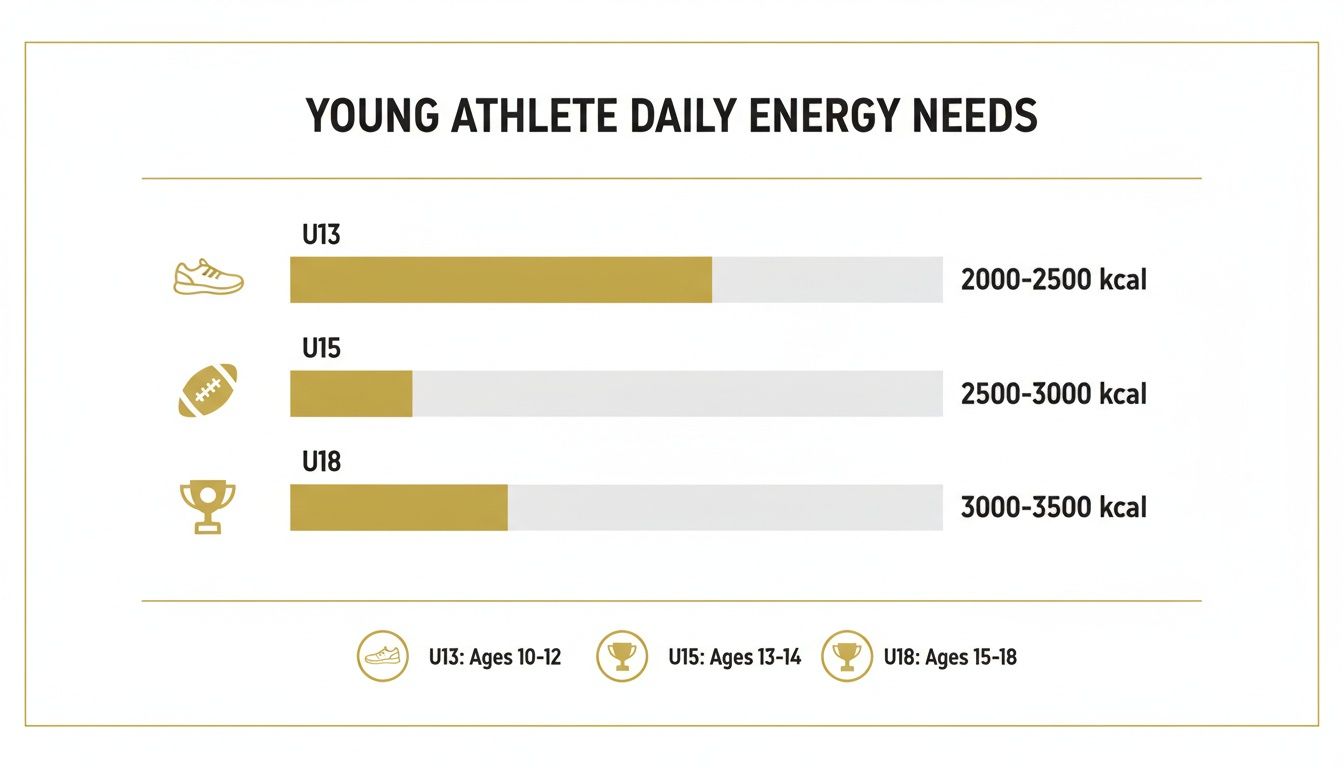
This chart demonstrates why nutrient-dense food choices are so important for meeting these demands. Ensuring a balanced mix of carbohydrates, protein, and healthy fats helps set them up for both their next competition and their future health.
Meal Timing and Hydration Strategies
Knowing what to eat is one part of the equation. Knowing when to eat is another, and it can be challenging for a young athlete balancing school, homework, and training.
This section outlines how to time meals and snacks around a busy schedule. The focus is on creating a nutritional timeline that supports performance from morning through to evening recovery.

Fuelling Before Training or Competition
The pre-training meal serves to top up the body’s energy stores. This meal ensures their muscles have readily available energy, which is key to delaying fatigue and maintaining performance.
Ideally, this meal should be consumed 1-3 hours before activity begins. This allows for proper digestion, helping to avoid sluggishness or stomach cramps. The meal should be high in carbohydrates, contain a moderate amount of protein, and be low in fat and fibre, as these can slow digestion.
For an early morning practice, a large meal may not be practical. A smaller, easily digestible snack about 30-60 minutes before is often a better option.
- For a morning session: A banana with a small pot of yoghurt or a slice of wholemeal toast with jam are suitable choices.
- For an after-school match: Lunch serves as the primary pre-fuelling meal. Examples include a sandwich with lean protein, a bowl of cereal, or pasta with a simple tomato sauce.
Fuelling During Longer Sessions
If a training session or match lasts longer than 60-90 minutes, a small top-up of fuel during the activity may be beneficial. This helps maintain stable blood sugar levels and can delay fatigue. The goal is simple, fast-acting carbohydrates.
Good options include:
- A small handful of dried fruit
- A sports gel or chew (often better suited for older teens in very intense sports)
- A banana or orange slices
The chosen snack should be light and easy to digest to avoid any gastrointestinal discomfort.
The Post-Exercise Recovery Window
What an athlete consumes after they finish training is just as important as what they consumed before. Immediately following a strenuous session, the body is highly receptive to nutrients for muscle repair and energy replenishment.
There is often a "recovery window," typically within the first 30-60 minutes after exercise, when the body is most efficient at this process. Consuming a mix of carbohydrates and protein during this time can significantly aid recovery.
Carbohydrates are needed to restock depleted muscle fuel stores, while protein provides the amino acids necessary to repair and strengthen muscle fibres.
This does not need to be complex. A glass of milk is an excellent option as it naturally contains both carbohydrates and protein. A piece of fruit with a handful of nuts or a small pot of Greek yoghurt are also effective choices. For those seeking additional support, understanding effective electrolyte replenishment can also be beneficial.
The Often-Overlooked Role of Hydration
Hydration is a cornerstone of athletic performance that is frequently overlooked. Even mild dehydration—a loss of just 2% of body weight in fluid—can negatively impact an athlete's concentration, skill, and stamina. Thirst is not always a reliable indicator; by the time an athlete feels thirsty, their performance may already be affected.
The goal is to begin every session well-hydrated. A simple way to monitor this is the urine colour test. Pale, straw-coloured urine generally indicates good hydration, while a darker, apple-juice colour suggests more fluids are needed.
This is a more common issue than many realise. A UK pilot study found that 26% of club swimmers were arriving at training already dehydrated. The same study also revealed a general lack of sports nutrition knowledge among the participants. You can read more about these findings on youth swimmer nutrition for additional context.
The most effective approach is to sip fluids throughout the day, rather than consuming a large amount right before a game. Young athletes should be encouraged to carry a water bottle and take small, regular sips at school and on the go.
The following timeline provides a practical example for a typical after-school training day.
Sample Fueling and Hydration Timeline for an Afternoon Training Session
| Time of Day | Action | Purpose | Examples |
|---|---|---|---|
| Lunchtime (1-2 pm) | Eat a balanced meal | Provide sustained energy for the afternoon and top up glycogen stores | Wholemeal sandwich with chicken, pasta salad, or a jacket potato with beans. |
| After School (3:30 pm) | Have a pre-training snack | Offer a quick carbohydrate boost to top off energy levels before the session | A banana, a small flapjack, a pot of yoghurt, or a piece of fruit. |
| During Training | Sip fluids regularly | Maintain hydration and prevent performance decline due to fluid loss | Water is usually sufficient; a sports drink may be considered for sessions >90 mins. |
| Immediately Post-Training | Consume a recovery snack | Kick-start muscle repair and replenish glycogen stores within the 30-60 minute window | A glass of milk, a recovery shake, or a small pot of Greek yoghurt with berries. |
| Evening Meal (7-8 pm) | Eat a full, balanced meal | Continue the recovery process and refuel the body for the next day | Lean protein (fish, chicken), complex carbs (rice, quinoa), and plenty of vegetables. |
This schedule illustrates how planning can help ensure an athlete has the energy required to perform well and recover effectively.
Navigating Supplements with a Food-First Approach
The world of sports supplements can be confusing, with many products making bold claims about enhancing recovery, strength, and performance. For parents, this can create pressure and uncertainty about whether their child might be missing something important.
In clinical settings, the guidance for young, growing athletes is clear: a food-first approach is nearly always the safest and most effective strategy. A balanced diet based on whole foods can provide everything a young athlete needs.

Why Food Always Comes First
Before considering any supplement, it is important to understand why real food is the foundation of nutrition for a developing body. Whole foods provide a complex array of vitamins, minerals, fibre, and other compounds that work together synergistically.
For instance, a scoop of protein powder does not replicate the iron, B vitamins, and zinc found in a piece of lean meat. A vitamin C tablet lacks the fibre and diverse antioxidants present in a fresh orange. Relying on supplements before establishing a solid dietary foundation can mask underlying nutritional gaps that should be addressed at their source.
A Closer Look at Common Supplements
Even with a food-first mindset, certain supplements are often discussed in youth sports. It is helpful to understand what they are and their appropriate use, if any.
Protein Powders
These are among the most common supplements. They are heavily marketed for muscle repair and growth. While young athletes do have higher protein needs, most can meet their requirements—typically 1.0 to 1.5 grams of protein per kilogram of body weight—through food alone. A chicken breast, a glass of milk, and a pot of Greek yoghurt can often meet these needs.
Protein supplements are essentially processed food. They may offer convenience in certain situations, such as when a proper meal is not available immediately after a competition, but they should not replace whole-food protein sources.
Multivitamins
A daily multivitamin can seem like a nutritional safety net. However, for a child consuming a varied diet rich in fruits, vegetables, and quality proteins, a general multivitamin is usually not necessary.
Specific deficiencies, such as low iron or vitamin D, may require targeted supplementation, but this should only be done after a clinical assessment by a GP or registered dietitian. If, following professional advice, foundational support is recommended, an option like the Viridikid Multivitamin & Mineral Formula might be considered.
The Potential Risks of Supplementation
For young athletes, the risks associated with supplements can outweigh the potential benefits. The supplement industry is not regulated as strictly as pharmaceuticals, which can lead to several concerns.
- Contamination: Products may contain unlisted ingredients, including stimulants or banned substances that could be harmful.
- Incorrect Dosing: Labels can be confusing, and a young person may inadvertently take a dose that is inappropriate for their age and body size.
- Unknown Long-Term Effects: There is a lack of research on the long-term effects of many supplements on growing bodies.
Given these risks, the guiding principle is to always seek professional medical advice before introducing any supplement. A conversation with a GP or a registered sports dietitian is the appropriate way to determine if a genuine nutritional gap exists that cannot be filled by food, and if so, what product is safe and suitable.
Recognising Red Flags and When to Seek Help
While establishing good nutritional habits is important, it is equally crucial to recognise signs that something may be wrong. The pressure to perform in youth sports can sometimes lead to disordered eating patterns or an athlete simply not consuming enough food to meet their training demands.
This imbalance can result in a condition known as Relative Energy Deficiency in Sport (RED-S). This occurs when energy expenditure from exercise consistently exceeds energy intake from food. When the body does not have enough energy to support all its essential systems, functions like hormone production, bone health, growth, and mood can be negatively affected.
Common Signs of Inadequate Fuelling
As a parent, carer, or coach, you are well-positioned to notice subtle shifts that might indicate a problem. These signs can sometimes be mistaken as normal for a dedicated athlete, but they often point to an energy deficit that needs attention.
It is important to look for patterns rather than isolated incidents. Identifying these signs early allows for intervention before they develop into more significant health issues.
Key indicators to watch for include:
- Persistent Fatigue: This is a deep, ongoing exhaustion that is not resolved by sleep and begins to affect school and daily life.
- Frequent Illness or Injury: An under-fuelled body may have a weakened immune system and slower recovery. Constant colds or nagging injuries like stress fractures or muscle strains can be a red flag.
- Stalled Growth or Delayed Puberty: When energy is scarce, the body may prioritise movement over growth. An athlete falling off their expected growth curve is a clear sign of an energy shortage.
- Changes in Mood: The brain requires a significant amount of energy. Irritability, difficulty concentrating, or unusual anxiety can be linked to inadequate fuelling.
- Obsessive Food Behaviours: While attention to healthy eating is positive, it can become problematic. Obsession with "clean" eating, elimination of entire food groups without medical reason, or intense guilt around food may signal a troubled relationship with eating.
These symptoms can be viewed as signals from the body that it lacks the resources to manage both intense training and basic biological functions. Ignoring them can have lasting consequences, particularly for bone health, which is established during these critical adolescent years.
When to Consult a Healthcare Professional
If you notice any of these red flags, especially in combination, it is advisable to seek professional help. These issues often require a multi-faceted approach and are not typically resolved by simple dietary changes alone.
Your General Practitioner (GP) is the best starting point. A GP can conduct an initial assessment, rule out other medical conditions, and perform tests, such as blood work, to check for nutrient deficiencies. They can then provide a referral to the appropriate specialists.
One of the most important professionals to consult is a registered sports dietitian. They are experts in nutrition for young athletes and can assess your child’s specific energy needs, identify nutritional gaps, and create a realistic plan to restore balance. Their guidance is crucial for providing the targeted support a young athlete needs to be both healthy and successful.
Building a Sustainable Foundation for Health
Throughout this guide, we have covered the high energy needs of young athletes and strategies for meal timing and fuelling. The main takeaway is that there is no single "perfect" food or magic formula. The key is consistency.
The goal is to build a sustainable nutritional foundation that supports not only immediate performance but also long-term health and development. By understanding these core principles, you are better equipped to navigate the often-confusing advice available. This can help you foster a positive, lifelong relationship with food for your young athlete.
This approach shifts the focus from chasing short-term performance to promoting long-term well-being. It prioritises mindful, consistent fuelling that respects the demands placed on a developing body, rather than enforcing restrictive rules. Over time, this helps create a healthier, more resilient athlete.
The most effective strategy is one of consistency and balance, not perfection. Fostering an environment where young athletes feel confident in their food choices is just as important as the food itself. This supports their physical and mental health.
While this guide provides a solid overview of nutrition for young athletes, sometimes a deeper understanding is needed. For a more structured look that connects all these concepts in greater detail, our dedicated guides offer a more comprehensive exploration of key health topics.
For those who want to go beyond articles, The Patients Guide offers structured, in-depth resources to help you manage health with confidence. You can explore all our available guides at https://www.thepatientsguide.co.uk.
Also in Nutrition


Understanding the Best Foods for Athletes: A Performance Nutrition Guide
Searching for the best foods for athletes? Our guide cuts through the noise, explaining how clinicians view nutrition for recovery, performance, and health.
Read More


A Patient's Guide to the B12 Blood Test
A clear guide to the B12 blood test. Understand why it's done, what the results mean, and what your next steps are in your health journey.
Read More


8 Calming Acid Reflux Recipes to Settle Your Stomach
Searching for acid reflux recipes that won't cause discomfort? Explore 8 gentle, clinician-informed meal ideas designed to calm and nourish your system.
Read More