



How to Improve Bone Density Naturally

Searching for ways to improve bone density naturally can be a confusing experience. You may have found conflicting advice online, from overly simple tips to complex medical information that’s difficult to apply to daily life.
Many people feel this way, trying to piece together a clear plan from fragmented information. This article aims to provide a grounded, practical overview based on how healthcare professionals approach bone health.
Our goal is not to offer quick fixes or miracle claims, but to explain the core principles of building stronger bones. This understanding is the foundation for making consistent, effective choices for your long-term skeletal health.
Understanding Your Personal Bone Health
A single, universal plan for improving bone density doesn't exist because everyone's starting point is different. A thoughtful approach begins with understanding your personal profile, which includes factors you can and cannot change.
Certain risk factors are predetermined:
- Age and Gender: Bone density tends to decline with age. For women, this process often accelerates after menopause due to hormonal shifts.
- Family History: A family history of osteoporosis or fractures can indicate a genetic predisposition to lower bone density.
- Body Frame: Individuals with smaller, thinner frames may have less bone mass to begin with, which can be a consideration later in life.
This flowchart illustrates how various factors—age, genetics, and lifestyle—are often considered together to build a clearer picture of an individual's bone health.
As you can see, bone health is not determined by a single factor but is the result of many interconnected influences.
The Clinical Perspective on Bone Strength
In a clinical setting, bone health is assessed holistically. A bone density scan provides a crucial piece of data, but it is always interpreted within the broader context of a person's overall health and lifestyle.
For example, two individuals might have the same bone density score, yet their fracture risk could differ significantly based on factors like muscle strength, balance, and daily activity levels. This is why a comprehensive approach is so important.
The issue is significant in the United Kingdom, where osteoporosis is estimated to affect 3.5 million people, contributing to over 500,000 fractures annually. These numbers underscore the need for proactive and preventative bone care.
How to Interpret Bone Density Scans
The standard tool for measuring bone mineral density (BMD) is a Dual-Energy X-ray Absorptiometry (DEXA) scan. It produces a "T-score," which compares your bone density to that of a healthy young adult at peak bone mass.
In clinical practice, the T-score helps categorize bone health into normal, low bone mass (osteopenia), or osteoporosis. However, it's just one data point. The real value is in using this information to create a personalised strategy.
Understanding your score is a starting point. A diagnosis of osteopenia, for instance, does not mean osteoporosis is inevitable. Rather, it serves as an important signal that now is an ideal time to implement natural, protective strategies to preserve and build bone strength. For a deeper dive into this condition, you might find our osteoporosis patient information guide helpful.
Ultimately, improving bone density naturally depends on understanding your unique situation and consistently applying evidence-based principles. It is a long-term investment in your future mobility and independence.
The Role of Nutrition in Building Bone
When discussing nutrition for bone health, calcium often comes to mind first. While it is essential, building a resilient skeleton requires a team of nutrients working together. A sustainable strategy prioritises whole foods.
By creating a diet that naturally includes these key components, you build a foundation for long-term health, gaining a full spectrum of vitamins and minerals that often work synergistically.
The Foundational Nutrients: Calcium and Vitamin D
Calcium forms the hard mineral structure of your bones. If dietary intake is insufficient, your body will draw calcium from your bones to perform other vital functions, such as muscle contraction and nerve transmission. Over time, this can weaken the skeleton.
However, calcium absorption from the gut into the bloodstream depends on vitamin D. In the UK, obtaining sufficient vitamin D from sunlight can be challenging, particularly between October and March.
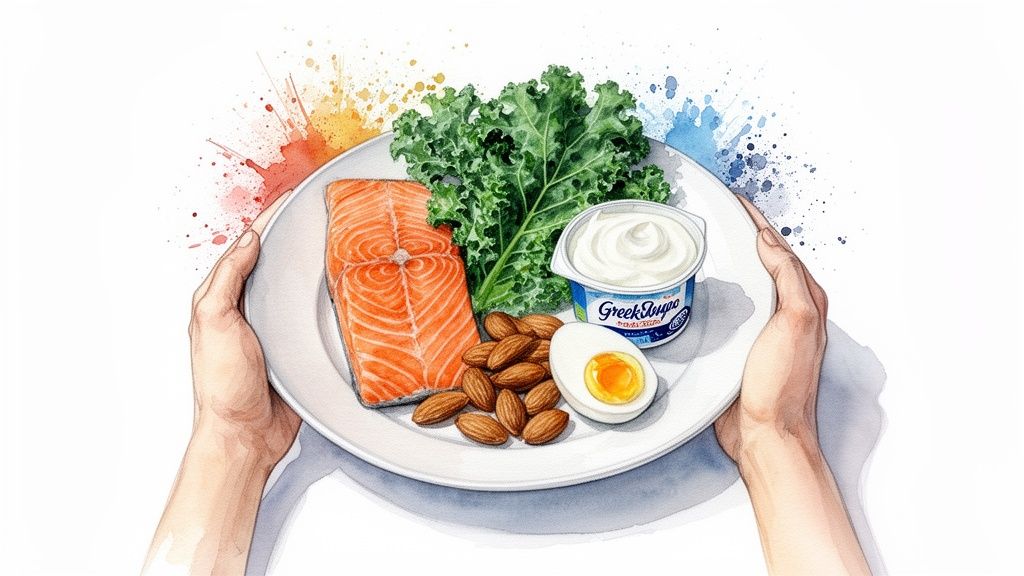
Therefore, dietary sources become crucial. Good options include:
- Dairy Products: Milk, cheese, and plain yoghurt are reliable and easily absorbed sources of calcium.
- Tinned Fish (with bones): Sardines and tinned salmon provide both calcium (from the soft, edible bones) and vitamin D.
- Fortified Foods: Many plant-based milks, breakfast cereals, and some breads are fortified with calcium and vitamin D.
- Dark Leafy Greens: Kale, rocket, and watercress contain calcium, though its absorption can be less efficient compared to dairy.
The Importance of High-Quality Protein
Protein constitutes approximately one-third of your bone mass, forming the flexible collagen framework that minerals adhere to. Without a robust protein matrix, bones can become brittle, even if mineral levels are adequate.
In clinical settings, low protein intake is sometimes observed, particularly among older adults. A steady supply of high-quality protein throughout the day is important for supporting both bone and the muscle that protects it.
There is a common misconception that high-protein diets are detrimental to bone health. Current evidence suggests the opposite: sufficient protein is essential, particularly when calcium intake is also adequate. These two nutrients work together to maintain bone structure.
Excellent protein sources include lean meats, poultry, fish, eggs, dairy, lentils, beans, and tofu. Spreading intake across meals helps provide a continuous supply for tissue repair.
The Supporting Nutrients for Bone Health
Beyond calcium, vitamin D, and protein, other nutrients play vital roles. A varied, whole-food diet is the most effective way to ensure you are getting a comprehensive range of these supportive elements.
This table outlines some of these key nutrients and where to find them.
Essential Nutrients for Bone Density and Their Food Sources
| Nutrient | Role in Bone Health | Common Food Sources (UK Examples) |
|---|---|---|
| Magnesium | Aids in converting vitamin D to its active form and works with calcium in the bone matrix. | Almonds, spinach, cashews, pumpkin seeds, wholemeal bread, dark chocolate. |
| Vitamin K2 | Helps direct calcium to the bones and away from arteries. | Natto (fermented soybeans), hard cheeses (like Gouda), egg yolks, butter from grass-fed cows. |
| Potassium | Helps neutralize body acids that might otherwise leach calcium from bones. | Bananas, avocados, sweet potatoes, spinach, white beans, dried apricots. |
| Zinc | Necessary for the function of bone-building cells (osteoblasts). | Oysters, beef, lamb, pumpkin seeds, lentils, chickpeas. |
Focusing on a diet rich in colourful vegetables, fruits, lean proteins, and healthy fats is the most reliable method for obtaining these nutrients. For those who find it challenging to meet their needs through diet alone, a well-formulated supplement may be considered. Our high-potency calcium and D3 supplement is designed to complement a food-first approach.
How Exercise Signals Bone Growth
While nutrition provides the building blocks for bone, exercise provides the signal for your body to use them. To be effective, movement must create specific forces that stimulate new bone growth through a process called mechanical loading.
Bones are dynamic tissues that constantly adapt. When they are put under stress from impact or tension, specialised cells sense this force and respond by laying down new bone tissue.
Without this mechanical signal, the body may not prioritise strengthening the skeleton. This is why a sedentary lifestyle can contribute to gradual bone loss over time. The key is to engage in activities that apply productive stress to the bones.
The Role of Weight-Bearing Exercises
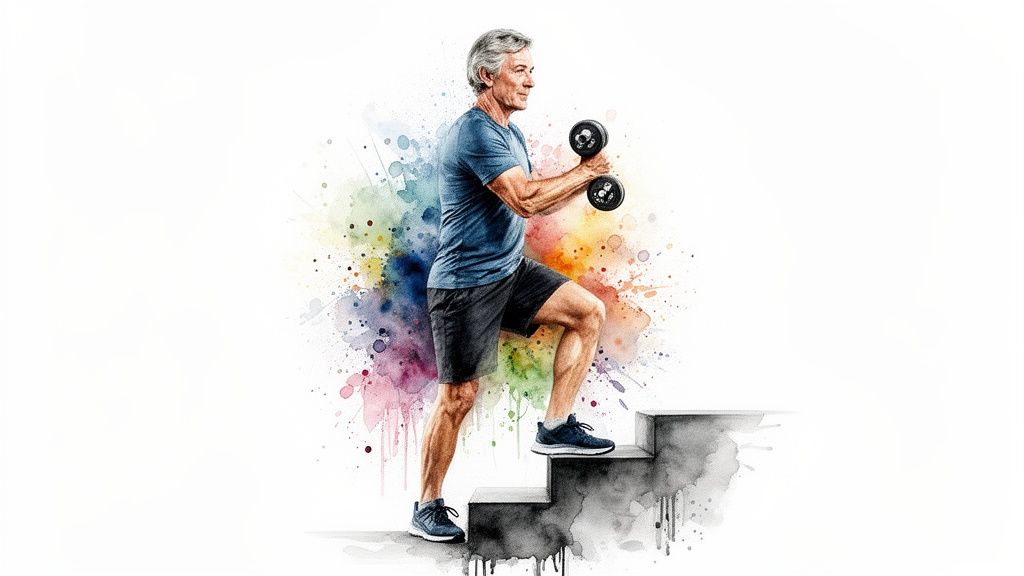
Weight-bearing exercise is any activity performed on your feet where your skeleton supports your body against gravity. This impact sends a direct message to your bones to maintain their strength and density.
These exercises can be categorized as:
- High-Impact: Activities like running, jumping, and dancing, which tend to generate strong bone-building signals.
- Low-Impact: Activities like brisk walking, using an elliptical trainer, or climbing stairs. These are gentler on the joints but still effective and can be a safer starting point for many.
The most appropriate choice depends on your current fitness level and joint health. For most people, a brisk walk is an excellent starting point as it places consistent, positive stress on the hips and spine—areas particularly vulnerable to fracture.
Adding Resistance Training
The second component of an effective plan is resistance training. This involves contracting your muscles against an opposing force, such as weights, resistance bands, or your own body weight.
As muscles pull on bones during these exercises, they create tension that stimulates bone-forming cells. This is a different type of mechanical load from weight-bearing exercise, and combining both is often considered the gold standard in clinical practice for bone health.
Meaningful results do not require hours in a gym. A few key exercises performed consistently two to three times per week can provide sufficient stimulus. The focus should be on proper form and gradual progression.
Foundational movements that target the spine and hips include:
- Squats: These load the spine and hips, which is beneficial for bone density. They can be started with body weight and progressed by adding resistance.
- Deadlifts: When performed correctly with a manageable weight, this exercise stimulates the entire posterior chain, including the lower spine and hips.
- Overhead Presses: This movement strengthens muscles that support the spine and can improve posture.
Success depends on the principle of progressive overload, which means gradually increasing the challenge over time by adding weight, repetitions, or reducing rest periods.
The Importance of Balance and Stability
While building stronger bones is crucial, preventing falls is equally important. A fall is often the event that turns low bone density into a fracture. Therefore, exercises that improve balance and stability are a vital part of any bone health plan.
Being steadier on your feet directly reduces fracture risk, regardless of your bone density score.
Simple practices can make a significant difference:
- Tai Chi: This gentle practice is well-regarded for its ability to improve balance and coordination.
- Yoga: Many yoga poses challenge stability and strengthen the small stabilising muscles around your joints.
- Single-Leg Stances: Practicing standing on one foot for 30 seconds can effectively train balance. It is wise to hold onto a stable surface for support if needed.
Incorporating these drills adds a critical layer of protection. Combining weight-bearing exercise, resistance training, and balance work creates a robust strategy for bone health.
Lifestyle Factors That Influence Your Bones
While diet and exercise are foundational, daily habits can either support or undermine your efforts. These lifestyle factors often have a significant long-term impact on skeletal health. It is not about making drastic changes overnight, but rather about understanding these connections to make informed choices.

The Link Between Smoking and Bone Health
The connection between smoking and weaker bones is well-established. Chemicals in tobacco smoke can negatively affect the skeletal system in several ways.
Smoking may disrupt hormonal balance, including oestrogen, which is important for maintaining bone density in both men and women. It also appears to impair the function of osteoblasts, the cells responsible for building new bone.
Furthermore, smoking can constrict blood vessels, potentially reducing blood flow and nutrient delivery to the bones. This can contribute to lower peak bone mass and accelerated bone loss with age.
A Measured Approach to Alcohol
Regarding alcohol and bone health, the amount consumed is the key factor. Chronic, heavy alcohol consumption is a known risk factor for osteoporosis.
Excessive drinking can interfere with the body's absorption of calcium and impact the function of the liver and pancreas, which are involved in activating vitamin D. For more information, you might find our vitamin D collection helpful.
From a clinical perspective, the main concern is regular, heavy drinking. This pattern can act as a direct toxin to bone-forming cells and disrupt the hormonal regulation of bone maintenance.
For most individuals, adhering to recommended low-risk drinking guidelines is a sensible approach. The goal is to make conscious choices based on an understanding of how these habits contribute to your overall bone health strategy.
Creating a Safer Home Environment
Building bone density is one part of the equation; preventing falls is the other. Proactively making your home safer is one of the most practical steps you can take to reduce injury risk, particularly if you have or are at risk of low bone density.
This is not about living in a bubble, but about identifying and addressing common hazards.
A few simple modifications can make a significant difference:
- Keep Pathways Clear: Ensure hallways, stairs, and living areas are free of clutter, loose cords, and throw rugs that could cause trips.
- Ensure Good Lighting: Use bright, non-glare bulbs, especially on stairs and in the bathroom. Night lights can help guide your way in the dark.
- Secure Rugs: Use double-sided tape or non-slip backing on all area rugs and bath mats to prevent them from sliding.
- Install Grab Rails: Consider adding sturdy grab rails in the bathroom—next to the toilet and in the shower or bath—for stable support on potentially wet surfaces.
These small but meaningful steps are a vital part of safeguarding your independence.
A Realistic View on Supplements for Bone Health
The supplement market can be overwhelming. While a food-first approach is the best foundation, supplements can play a targeted role in filling nutritional gaps that may be difficult to address through diet alone.
They should be viewed as a sensible complement to, not a replacement for, a healthy diet and lifestyle. Supplements are not a shortcut, but they can be a useful part of a comprehensive plan for how to improve bone density naturally.
Calcium and Vitamin D Supplements
Calcium and vitamin D are the most discussed nutrients for bone health. Before starting a supplement, it is important to assess if you have a genuine gap to fill.
Consider the following:
- Your Diet: Do you consistently consume calcium-rich foods like dairy, fortified plant milks, or tinned fish with bones? If not, a supplement may be worth considering.
- Sunlight Exposure: In the UK, getting enough vitamin D from the sun is difficult from October to March. This is why supplementation is often recommended during these months.
- Underlying Conditions: Some health issues can affect nutrient absorption, which may warrant supplementation under medical guidance.
Other Nutrients like Magnesium and K2
Magnesium and vitamin K2 are also promoted for bone support. While both are important for skeletal health, the evidence for widespread supplementation is less clear.
Magnesium assists in activating vitamin D, and vitamin K2 helps direct calcium into bone. A diet rich in leafy greens, nuts, seeds, and fermented foods typically provides adequate amounts of both. Supplementation may be useful in specific cases, but this is a decision best made in consultation with a healthcare professional.
The goal of supplementation should be to correct a known or likely deficiency, not to add more of a nutrient you already have in sufficient amounts. In some cases, excessive supplementation can be unhelpful or even harmful.
Using Supplements Wisely
If you and your healthcare provider determine a supplement is appropriate, choose a high-quality product and follow the recommended dosage.
Remember, supplements work best when they support a nutrient-dense diet and consistent exercise routine. For those interested in broader support for the body's framework, our guide on collagen for joint and skin health offers more information on strengthening connective tissues. A supplement is there to support your efforts, not to replace them.
Common Questions About Improving Bone Density
It is natural to have questions when taking a more active role in your health. Here are straightforward answers to some common queries about bone density.
How Long Does It Take to Naturally Improve Bone Density?
Improving bone density is a gradual process. The body's bone remodeling cycle—breaking down old bone and building new tissue—is inherently slow.
It typically takes at least one to two years of consistent effort before measurable changes might be visible on a DEXA scan. An initial success is often slowing the rate of bone loss. From that point, consistent nutrition and exercise can begin to build new bone.
Can Osteoporosis Be Reversed Naturally?
While the term "reversal" may not be clinically accurate, you can certainly make a significant, positive impact on bone density and fracture risk through natural strategies. The goal is not to erase a diagnosis but to actively strengthen your skeleton.
A dedicated plan of bone-supportive nutrition, appropriate exercise, and lifestyle modifications can lead to measurable gains in bone mineral density. For those with an osteoporosis diagnosis, these natural strategies are powerful complements to any prescribed medical treatments. The primary aim is to lower your future fracture risk.
In clinical practice, the focus is less on reversing a label and more on making your existing bone as strong and resilient as possible. Every positive change contributes to that goal.
Are There "Superfoods" for Bone Health?
The idea of a single "superfood" is more of a marketing concept than a nutritional one. Your overall dietary pattern has a much greater impact than any one food.
That said, certain foods are particularly nutrient-dense for bones. It is helpful to build your diet around them:
- Dairy: Plain yoghurt and kefir.
- Tinned fish: Sardines and salmon with edible bones.
- Dark leafy greens: Kale, rocket, and watercress.
The key is not a single magic food but the consistent inclusion of a variety of these nutrient-rich foods.
Is Walking Enough Exercise to Increase Bone Density?
Walking is an excellent and accessible weight-bearing exercise that is very effective for maintaining current bone density. It is a perfect starting point.
However, to signal the body to build new bone, the skeleton often benefits from more varied and progressively challenging loads. This is why resistance training (using weights or bands) is almost always recommended as a complementary activity. For those for whom it is safe, higher-impact activities like jogging or dancing can provide an even stronger stimulus. A combination of approaches tends to be most effective.
Understanding the principles of bone health is the first step. Translating that knowledge into a structured, daily plan is where real change happens. For readers who want to go beyond articles and follow a clear, step-by-step framework, we created The Patients Guide.
Our guides are designed to bring essential, evidence-based information into one organised, easy-to-follow resource. They help connect the dots between daily choices and long-term health outcomes. You can explore all of our guides at https://www.thepatientsguide.co.uk.
Also in Osteoporosis

Osteoporosis Patient Information: A Guide to Understanding Bone Health
Get osteoporosis patient information with a clear guide to bone health, causes, DEXA scans, and treatments to help you manage confidently.
Read More