






A Guide to Supplements for Migraines


Searching for information on supplements for migraines can often lead to more confusion than clarity. Many people find themselves navigating a sea of conflicting advice, from miracle claims on one website to dismissive articles on another.
It's understandable to feel overwhelmed by the sheer volume of information and unsure of what to trust. This is a common experience for those trying to find reliable guidance online.
This article is designed to offer a different approach. We're not here to promise a quick fix or promote a specific product. Instead, the goal is to provide a calm, grounded overview of how healthcare professionals often think about this topic.
We will focus on the supplements most commonly discussed in clinical settings for migraine prevention, exploring why they are considered, not just what they are. This includes:
- The primary candidates: We'll look at the supplements with the most consistent evidence.
- The supporting science: We'll honestly assess the strength of the research behind each one.
- The proposed mechanisms: We'll explain how these supplements are thought to support brain health.
- A safe approach: We'll cover general safety considerations and how to have an informed discussion with your doctor.
This information is intended to support, not replace, a conversation with your healthcare provider. Understanding the clinical reasoning can empower you to ask better questions and make more confident decisions about your care.
Moving from collecting tips to understanding the underlying mechanisms is a significant step in managing a complex condition like migraine. This educational focus is central to all our resources, including our broader articles on understanding and managing migraines.
Your journey with migraine is unique. Arming yourself with clear, balanced information helps you become an active partner in your own healthcare. Think of this article as a foundation of understanding to build upon with your medical team.
The Role of Supplements in Migraine Prevention
Before exploring specific supplements for migraines, it's important to understand their intended role. In clinical settings, supplements are not viewed as a cure but as potential tools to help improve the brain's resilience.
The primary goal is often to raise the threshold for a migraine attack. Imagine your brain has a certain capacity to handle triggers like stress, poor sleep, or hormonal changes. If that capacity is low, it may not take much to initiate a migraine. The theory behind certain supplements is that they may help increase that capacity, making the brain less susceptible to triggers.
This is the path from feeling overwhelmed by choices to feeling informed and confident in your discussions about health.
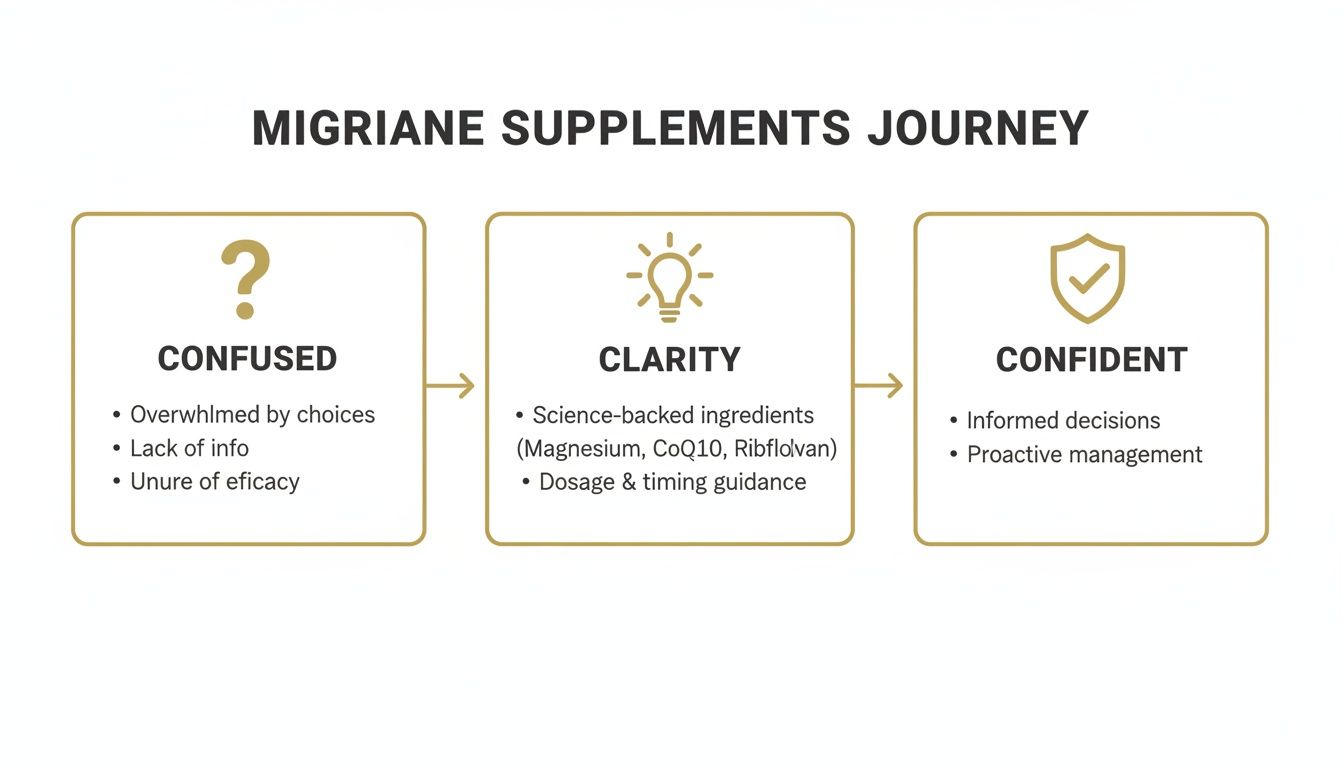
It’s about moving from a state of uncertainty to one of clarity, equipped with balanced information.
Supporting Brain Energy Production
One of the key theories in migraine research involves mitochondrial dysfunction. This term describes a state where the tiny power plants (mitochondria) inside brain cells may not be producing energy as efficiently as they should.
When brain cells have an energy deficit, they can become more vulnerable, potentially making it easier for the cascade of events that leads to a migraine attack to begin.
This is where supplements like Riboflavin (Vitamin B2) and Coenzyme Q10 come into the conversation. They are thought to directly support mitochondrial function. The aim is to help boost cellular energy production, giving brain cells the fuel they need to better withstand triggers.
By targeting underlying energy systems, these supplements are intended to bolster the brain's natural stability. This is a preventative strategy, designed to make attacks less frequent or severe over time, not to stop an attack that has already started.
Calming Overactive Nerve Pathways
Another important concept is neuronal hyperexcitability. This means that in some people with migraine, the nerve cells in the brain can be unusually sensitive and more easily provoked.
This over-reactivity can trigger a wave of brain activity known as "cortical spreading depression," which is understood to be the process behind migraine aura and the initiation of the headache phase.
Magnesium is a well-known supplement that may help address this. It is a mineral that plays a crucial role in calming the nervous system. It helps regulate neurotransmitter activity and may reduce the excitability of sensitive nerve cells.
Since lower levels of magnesium are more commonly found in people with migraine, supplementation is often considered as a way to help restore balance and reduce this background "noise."
Key Supplements in Migraine Prevention
| Supplement | Proposed Mechanism of Action | General Evidence Level |
|---|---|---|
| Magnesium | May reduce neuronal hyperexcitability by stabilising nerve cell membranes. | Moderate to Strong |
| Riboflavin (B2) | Supports mitochondrial energy production within brain cells. | Moderate to Strong |
| Coenzyme Q10 | Enhances mitochondrial function and acts as an antioxidant. | Moderate |
| Feverfew | May reduce inflammation and inhibit certain processes linked to migraine. | Moderate (Mixed Results) |
| Butterbur | Acts as an anti-inflammatory and may calm overactive nerve pathways. | Strong (but with safety caveats) |
By understanding these two core ideas—supporting brain energy and calming sensitive nerves—you can begin to see supplements not as a random list, but as targeted tools. Each is proposed to address a specific physiological process that may contribute to migraines. This framework allows for a more logical discussion with your healthcare provider about what, if anything, might be appropriate for you.
Magnesium as a Foundation for Brain Health
When it comes to migraine prevention, magnesium is often one of the first supplements discussed in clinical settings. This essential mineral is involved in hundreds of bodily processes, but its role in regulating nerve function is what makes it relevant for migraine.
In clinical practice, magnesium is often thought of as a calming agent for an over-excitable nervous system. Research suggests that people who experience migraines are more likely to have lower levels of magnesium than those who do not. This potential shortfall could contribute to a lower threshold for triggering a migraine attack.

The theory is that magnesium helps to counteract "cortical spreading depression"—a wave of intense brain activity linked to migraine aura and the onset of pain. By helping to stabilise nerve cells, magnesium may make the brain less prone to this disruptive event.
Choosing the Right Form of Magnesium
The type of magnesium you choose can have a real impact on how well your body absorbs it and whether it causes side effects, such as digestive upset.
Understanding the differences can help you and your doctor make an informed choice. Some forms are simply better absorbed and gentler on the stomach than others.
Here are the forms most commonly considered for migraine:
- Magnesium Glycinate: This form is bound to glycine, an amino acid with its own calming properties. It’s known for being well-absorbed and gentle on the gut, making it a common starting point.
- Magnesium Citrate: This is another well-absorbed option, but it can have a mild laxative effect. For this reason, it may not be the best choice for those with a sensitive digestive system.
- Magnesium Oxide: This is a common and inexpensive form, but it is not absorbed as well by the body. A significant portion may pass through the digestive system, making it more likely to cause loose stools.
Choosing the right form of magnesium is often a practical decision. It involves balancing good absorption with individual digestive tolerance. What works well for one person may not suit another.
Dosing and Expectations
For migraine prevention, clinical studies typically use doses between 400–600mg of elemental magnesium per day. It is important to check the supplement label for the ‘elemental’ amount, as this tells you how much pure magnesium is in each dose.
Magnesium is not a quick fix. Like other preventative strategies, it requires consistency and patience. It can take several weeks, and sometimes up to three months, before it's possible to determine if it is making a noticeable difference to migraine frequency or severity.
While many people find magnesium to be a helpful part of their management plan, it is not effective for everyone. The most important step is to speak with your doctor to decide if magnesium is a safe and appropriate choice for you.
Riboflavin (Vitamin B2): Fuelling Brain Cells
Alongside magnesium, Riboflavin (Vitamin B2) is another supplement frequently considered for migraine prevention. Its potential benefits are thought to relate to the mitochondria—the tiny energy producers inside your brain cells.
If these cellular "engines" aren't running efficiently, they may not produce enough energy. This can create a form of metabolic stress that many clinicians believe can lower the threshold for a migraine attack, leaving the brain more vulnerable to triggers.

Riboflavin is thought to support these mitochondrial power plants directly. It helps them generate energy more effectively, which may, in turn, help build the brain's resilience over time.
A High-Dose, Slow-Burn Strategy
It's important to understand that using Riboflavin for migraine involves a specific approach that differs from general nutritional supplementation.
The dose used in most clinical trials is 400mg per day. This is a therapeutic amount, much higher than what you would find in a standard multivitamin or B-complex supplement. These lower doses are not expected to have the same effect on mitochondrial energy production.
This high dose is believed to be necessary to fully saturate the cellular energy pathways.
It's also vital to have realistic expectations. Riboflavin is not an acute treatment taken when a migraine starts. It is a slow-acting preventative. Evidence suggests it can take up to three months of consistent, daily use before its effectiveness can be properly assessed.
What the Evidence Says
Several clinical trials have investigated the use of Riboflavin for migraine, and it is recognised in some treatment guidelines as a credible preventative option.
Studies have shown that a 400mg daily dose can reduce attack frequency by 50% in a significant portion of users after three months. This body of evidence makes Riboflavin a well-tolerated and credible option to discuss with your healthcare professional.
Practical Points to Consider
If you and your doctor decide a trial of Riboflavin is appropriate, there are a few practical things to keep in mind.
- Patience is essential: Committing to a three-month trial period is necessary to determine if it could be helpful for you.
- A harmless side effect: High-dose Riboflavin often causes bright, fluorescent-yellow urine. This is completely harmless and is simply the body excreting the excess.
- Consistency is key: Like any preventative, it needs to be taken every day to build up its effect in your system.
A conversation with your doctor can help you weigh the potential benefits against your personal health history. It represents a different approach to migraine prevention compared to magnesium, focusing squarely on the energy dynamics inside brain cells.
Coenzyme Q10: The Cellular Protector
Like Riboflavin, Coenzyme Q10 (CoQ10) is another supplement that works by supporting the mitochondria. However, CoQ10 has an additional function: it is also a powerful antioxidant, which is why it has become a key consideration in migraine prevention.
This dual action is what makes it particularly interesting to researchers and clinicians. It not only helps cellular energy production run more efficiently but may also protect brain cells from what is known as oxidative stress—a form of cellular damage that some experts believe contributes to migraine.

By supporting both energy production and cellular defences, CoQ10 may help create a more stable internal environment in the brain, potentially making it less susceptible to migraine triggers.
What is the Antioxidant Advantage?
Oxidative stress can be thought of as a form of cellular 'rust'. It is a natural byproduct of energy production, but if it becomes excessive, it can damage cells, including the highly sensitive neurons in the brain.
CoQ10 acts as an antioxidant, neutralising the unstable molecules that cause this damage. This protective role is thought to help quieten some of the underlying inflammation and instability that can set the stage for a migraine attack. It is another tool aimed at raising the migraine threshold.
From a clinician's perspective, CoQ10 is a compelling option because it targets two potential migraine-related pathways at once: the energy deficit and the resulting cellular stress. This makes it a well-rounded choice to consider for preventative care.
Dosing and What the Evidence Shows
In clinical studies focusing on migraine prevention, the typical daily dosage for CoQ10 ranges from 100mg to 300mg. Much like Riboflavin, these are considered therapeutic doses intended to produce a specific physiological effect.
Some studies have shown that a significant number of people taking CoQ10 experience a meaningful reduction in the frequency of their migraine attacks. CoQ10 also has an excellent safety profile. It is generally very well-tolerated, and side effects at the doses used for migraine are uncommon.
Remember: Patience and Consistency are Crucial
Just like other preventative supplements, CoQ10 is a long-term strategy. It will not stop a migraine that has already started. Instead, it requires time to build up in your system and work at a cellular level.
To determine if it is making a difference, a trial of at least three months is typically recommended. Keeping a detailed migraine diary during this period is the best way to objectively track any changes in the frequency or severity of your attacks.
This information allows for a much clearer conversation with your GP or specialist about whether CoQ1..."
This information allows for a much clearer conversation with your GP or specialist about whether CoQ10 is a suitable part of your migraine management plan.
How to Approach Supplements Safely
Considering supplements for migraines is a significant step. It's a path many people explore, but it's crucial to approach it with the same care you would any medical treatment. The key is not to accumulate a collection of bottles, but to test one thing at a time, methodically and safely.
A scattered approach often creates more confusion. If you start three new supplements at once and your migraines improve, which one was responsible? If you feel unwell, which one is the cause? A clear, systematic plan is essential for gathering useful information.
Start One at a Time
Clinicians will almost always advise introducing only one new supplement at a time. This is the only way to truly understand how it affects your body.
By isolating a single supplement, you create a straightforward way to observe cause and effect. Any changes you notice—positive or negative—can be more reliably linked to that one variable. This provides you and your doctor with clearer information to work with.
Commit to a Fair Trial Period
Unlike acute medication taken when an attack starts, preventative supplements are not a quick fix. They work gradually to create change at a cellular level, whether by supporting mitochondrial energy or calming nerve excitability. This process takes time.
For this reason, giving any supplement a fair trial is essential.
- Minimum Duration: Most expert guidelines suggest a trial of at least three months once the recommended dose is reached.
- Why Three Months? This allows the supplement enough time to build up in your system and for you to see a genuine pattern of change in your migraine diary. One good month could be a coincidence.
- Track Your Progress: A migraine diary is an invaluable tool. It turns subjective feelings into objective data, making it much easier to decide with your doctor if the supplement is making a meaningful difference.
Stopping after only a few weeks means you might miss a potential benefit. Patience is a critical part of the process.
Prioritise Quality and Purity
The supplement industry is not regulated in the same way as the pharmaceutical industry. This means that the quality of products can vary significantly between brands. A low-quality product might be contaminated or contain less of the active ingredient than stated on the label.
Choosing a reputable brand is non-negotiable. Look for companies that use independent, third-party testing to verify the purity and potency of their products. This provides assurance that you are getting what you paid for.
Discuss Interactions with Your Doctor
The term "natural" does not mean "harmless." Supplements are biologically active substances that can have powerful effects. They can interfere with prescription medications, interact with other supplements, or pose risks for people with certain health conditions.
Before starting anything new, it is essential to have a conversation with your doctor or pharmacist. They can review your complete medical history and current medications to identify any potential interactions and help you make a safe choice. This conversation is a fundamental part of responsible health management.
For readers wanting a structured overview of this process, this is explored in more detail in our Migraine Guide. It provides a framework for integrating and tracking supplements as one part of a comprehensive management strategy.
Frequently Asked Questions About Migraine Supplements
When people begin to explore supplements for migraine, many practical questions arise. Understanding the theory is one thing, but knowing how to apply it in daily life is another. Let's address some of the most common questions.
Having clear, grounded answers helps build a sensible framework for trying supplements and facilitates a more productive discussion with your doctor.
Can I Take All These Supplements at Once?
While it may be tempting to try everything at once, most clinicians would strongly advise against it. The recommended approach is to introduce new supplements one at a time.
This method allows you to clearly identify if a particular supplement is making a difference. It is also crucial for safety. If you start three new things and experience side effects, it is difficult to know which one is the cause. A general rule is to trial one supplement for at least three months before considering adding another, always under your doctor's guidance.
How Long Does It Take for a Migraine Supplement to Work?
Patience is essential. Unlike medications taken to stop an attack in progress, preventative supplements work behind the scenes. They require time to build up in your system and exert their effects at a cellular level.
Most studies and clinical guidelines recommend a trial period of at least three months at the correct dose. Stopping after only a few weeks may mean you miss out on a potential benefit. Keeping a detailed migraine diary is invaluable for tracking changes in attack frequency, severity, and duration over time.
This data gives you and your clinician something concrete to discuss. Relying on memory alone can be difficult, as subtle, gradual improvements over months are easy to miss.
Are ‘Natural’ Supplements Safer Than Prescription Medications?
This is a common misconception. The term "natural" does not automatically mean a product is safe.
Supplements contain biologically active compounds that can cause side effects and interact with other medications. For example, some supplements may not be suitable for people with certain health conditions, such as kidney disease. It is vital to treat them with the same caution as any prescription drug. Always discuss any new supplement with your doctor or pharmacist to ensure it is an appropriate and safe choice for you.
For readers who want to move beyond articles and follow a structured approach to understanding their condition, The Patients Guide offers detailed, step-by-step resources. Explore our full library of health guides at https://www.thepatientsguide.co.uk.
Also in Migraines


Finding Clear Help with Migraines: A Grounded Guide
Feeling overwhelmed? Get clear, evidence-based help with migraines. This guide explains how to manage symptoms, track triggers, and talk to your doctor.
Read More


Understanding Ocular Migraine Symptoms and Triggers
A clear, reassuring guide to understanding ocular migraine. Learn to identify symptoms, understand triggers, and know when to seek professional care.
Read More


Understanding Migraine Vestibular Vertigo
A clear guide to understanding migraine vestibular vertigo. Learn to recognize its symptoms, understand the causes, and explore effective management strategies.
Read More