
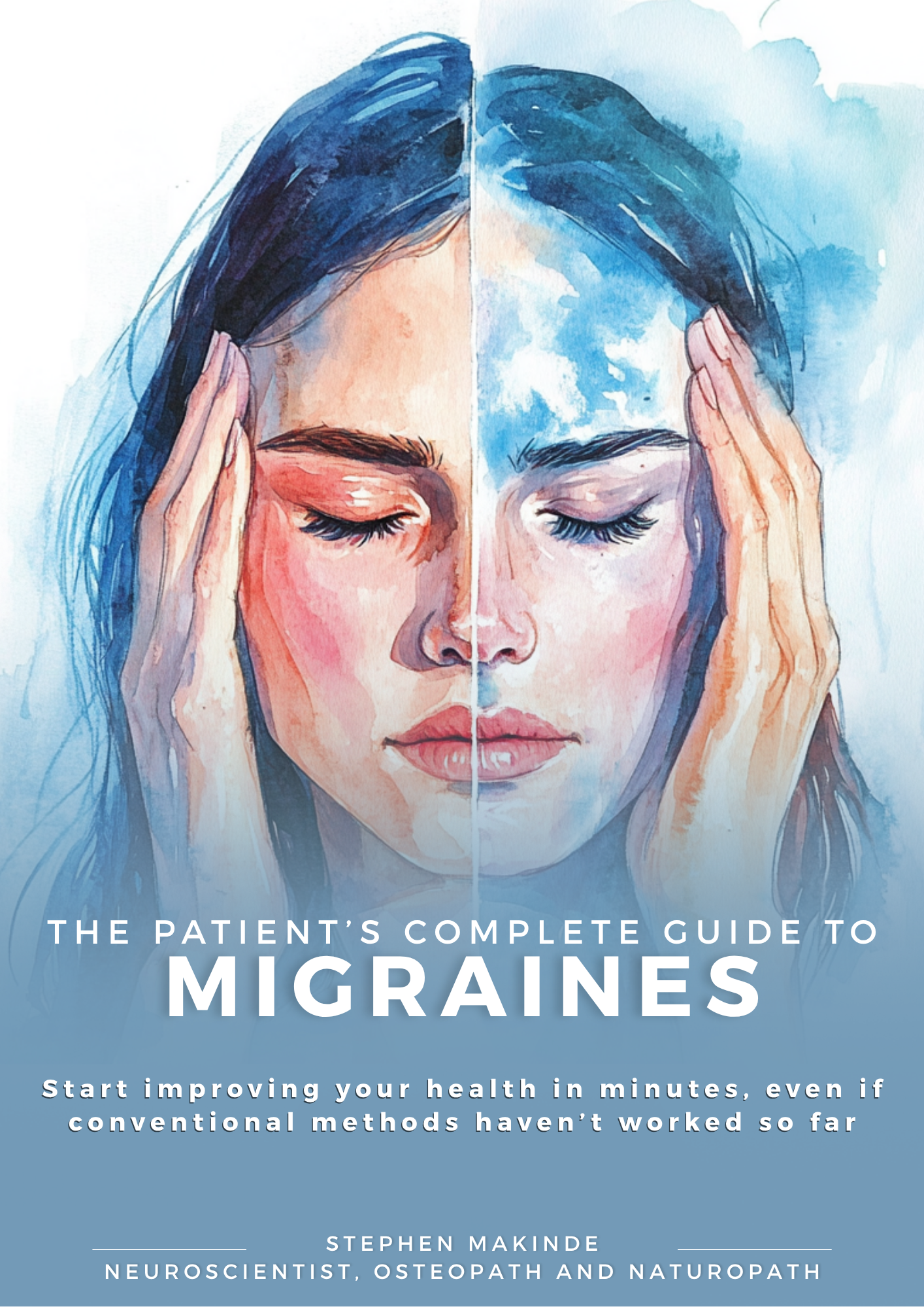


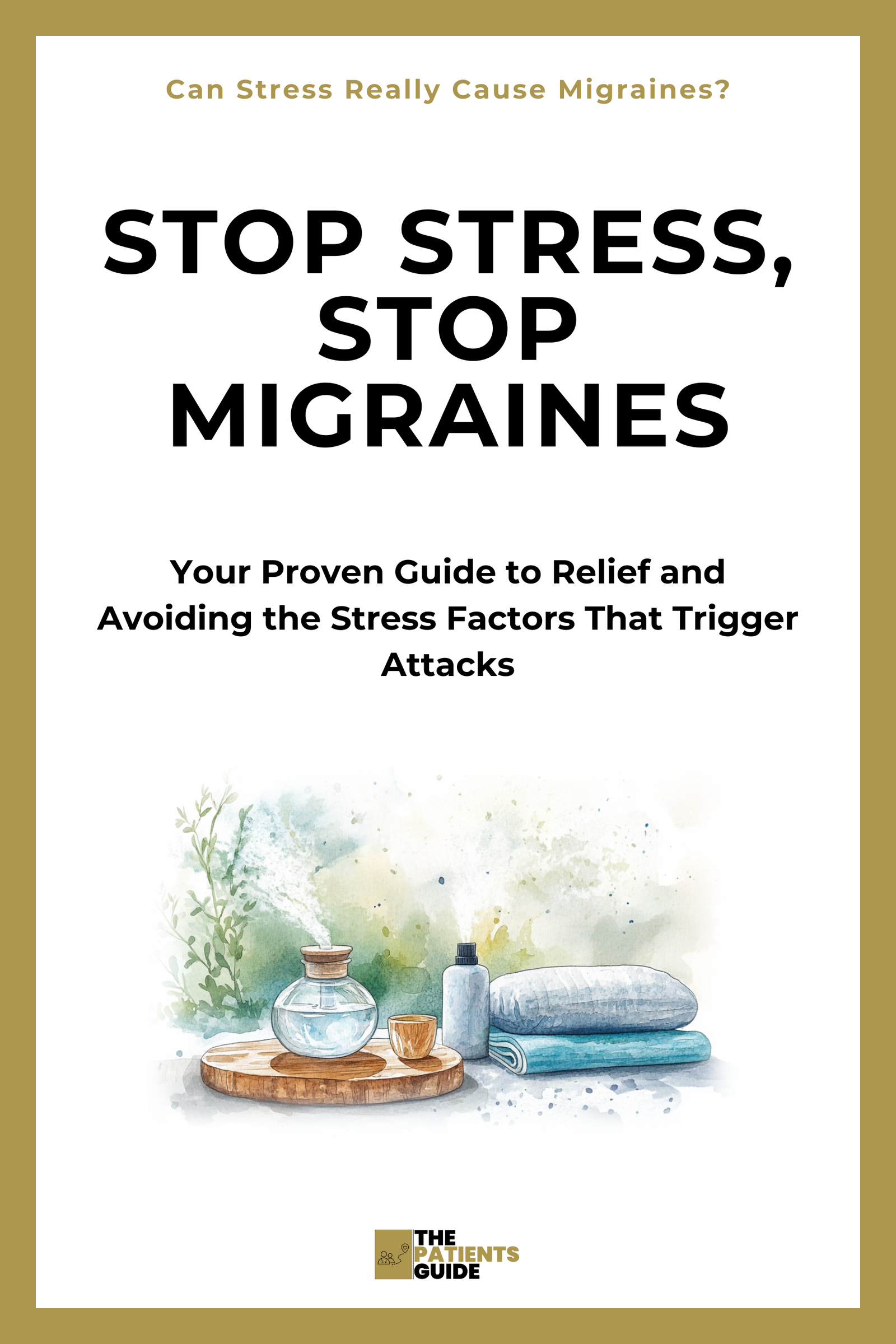

Stop Stress, Stop Migraines

Stop Stress, Stop Migraines
A clinically informed guide developed from long-term practice.
I have spent over 20 years in clinical practice, contributing to the care of hundreds of thousands of patient cases, with formal training in Neuroscience, Osteopathy, and Western Acupuncture. This guide reflects recurring clinical patterns seen in migraine care, where stress-related nervous system activation, muscle tension, sleep disruption, and hormonal changes contribute to migraine frequency and severity. It focuses on practical, conservative strategies used to reduce stress load and improve resilience, without replacing medical care.
What you’ll get in this mini guide
✅ Stress and migraine connection explained
Explains how stress affects the nervous system, blood flow, muscle tension, and brain chemistry in ways that increase migraine susceptibility.
✅ Identification of personal stress triggers
Helps recognise common work, lifestyle, sleep, environmental, and hormonal stressors linked to migraine patterns.
✅ Proven stress-reduction techniques
Introduces breathing exercises, progressive muscle relaxation, mindfulness, and time-management strategies used to lower daily tension.
✅ Lifestyle adjustments that reduce risk
Covers sleep hygiene, physical activity, hydration, and routine stability to support long-term stress management.
✅ Actionable, step-by-step approach
Designed to help apply stress-reduction strategies immediately and build sustainable habits over time.
This mini guide is intended for individuals who experience stress-related migraines and want clear, practical strategies to reduce trigger load, improve resilience, and support migraine management alongside existing care.
Stress is one of the biggest migraine triggers, affecting hormones, blood flow, and muscle tension—all of which contribute to painful attacks. Managing stress effectively can make a huge difference in migraine frequency and severity.
This quick, practical guide is designed to help you identify stress-related migraine triggers and apply proven relaxation techniques, mindfulness exercises, and lifestyle adjustments to lower your stress levels and reduce migraine attacks.
WHAT YOU’LL GET IN THIS GUIDE
✅ STRESS & MIGRAINES EXPLAINED – Explore the scientific reasons and triggers behind stress-induced migraines that increase your vulnerability to attacks.
✅ FIND YOUR TRIGGERS – Identify daily stressors that may be worsening your migraines.
✅ PROVEN RELIEF TECHNIQUES – Master breathing exercises, progressive muscle relaxation, and time management to lower daily tension.
✅ LIFESTYLE ADJUSTMENTS – Reduce migraine risk with better sleep, exercise, hydration, and stress-reducing habits.
✅ ACTIONABLE PLAN – A step-by-step strategy to help you apply these techniques immediately and see results.
WHY THIS MINI-GUIDE IS WORTH IT
- Easy to Use – A straightforward, no-fluff guide designed for busy individuals.
- Science-Backed Strategies – Every tip is rooted in research and expert recommendations.
- Fast-Acting Relief – Focuses on actionable steps you can implement right away.
- Long-Term Stress Prevention – Helps you build habits that make stress-induced migraines less frequent and severe.
- Instant Access, Lifetime Use – This digital guide is yours forever, so you can refer back anytime you need help.
HOW TO USE THIS GUIDE
- Download Instantly: Access your copy immediately after purchase.
- Understand the Connection: Start with the science behind stress and how it triggers migraines.
- Apply Stress-Reduction Techniques: Use breathing exercises, relaxation methods, and time management strategies to lower stress levels fast.
- Make Small, Daily Adjustments: Improve sleep, hydration, and routine habits to maintain long-term stress relief.
- Track Your Progress: Monitor your stress levels and migraine patterns to refine your approach over time.
REDUCE STRESS, REDUCE MIGRAINES—START NOW
Stress doesn’t have to control your migraines. By taking a proactive approach, you can lower tension, improve resilience, and prevent stress-induced attacks before they start.
✔️ Compatible with all devices: 📱 iPhone, 📱 iPad, 🤖 Android, 💻 Desktop.
🔔 Note: For larger screens and expanded viewing controls, tablets and desktops provide the best experience.
Get in Touch with Us
Your Questions, Answered
Have a question about our upcoming guides or need assistance with your health journey?
Use the form to reach out!
Whether you’re curious about specific topics, looking for guidance, or just want to stay updated, we’re here to help.