




The Best Diet for Osteoporosis: A Guide to Building Bone Strength

Searching for advice on diet and osteoporosis can be a confusing experience. One article may recommend a specific "miracle food," while another tells you to avoid it. This often leaves people feeling overwhelmed, unsure of what to eat or how to begin making changes that will actually help.
The reality is that lasting bone health isn't built on a single food or a quick fix. It comes from a consistent and thoughtful pattern of eating.
This guide is designed to move past the conflicting lists of "good" and "bad" foods. Instead, we will explore the core principles that healthcare professionals use when advising on nutrition for bone health. The goal is not just to tell you what to do, but to help you understand why certain dietary approaches are recommended.
This understanding is the first step towards building a sustainable, effective plan for your bones, allowing for more productive conversations with your healthcare team.
Starting Your Journey with an Osteoporosis Diet
If you've already started looking into diet for bone health, you've likely encountered a lot of contradictory advice. It's common to feel frustrated and uncertain about where to start.
This guide aims to bring clarity to that confusion. We will explain how nutrition impacts your skeleton, focusing on the fundamental principles that guide clinical thinking.
Rather than providing another list of foods, our goal is to help you understand what makes a dietary pattern genuinely supportive for your bones. In the UK, where osteoporosis affects around 3.5 million people, official guidelines emphasize a healthy, balanced, and calcium-rich diet. This approach—high in fruits, vegetables, fish, and whole grains—is linked to a reduced risk of low bone mineral density and hip fractures. You can review the government's complete findings on UK dietary patterns and bone health to see the evidence.
This article is not a substitute for medical advice. Instead, it's intended to equip you with foundational knowledge. A clearer understanding of why certain foods matter can help you have more meaningful conversations with your doctor and collaborate on a plan that feels right for you.
The Foundational Pillars of Bone Health: Calcium and Vitamin D
When clinicians discuss building a diet for stronger bones, the conversation almost always starts with two key nutrients: calcium and vitamin D. It's helpful to think of them as a team; their partnership is fundamental to maintaining a strong skeleton.
Calcium can be thought of as the primary building block for your bones—the "bricks" that provide structure and density. If your body doesn't get a steady supply of these bricks from your diet, it has a backup plan: it will start to draw calcium directly from your bones, which can leave them weaker and more prone to fractures over time.
However, dietary calcium alone is not enough. This is where vitamin D plays a crucial role. Vitamin D acts like a key, unlocking your body's ability to absorb calcium from your food and guide it into your skeleton where it is needed. Without sufficient vitamin D, much of the calcium you consume may pass through your system unused.
Meeting Your Calcium Needs Through Diet
In the UK, the recommended daily intake for adults is 700mg of calcium. This amount is often achievable through diet. A "food first" approach is generally preferred because whole foods provide a complex mix of other nutrients that support overall health.
Some of the most reliable dietary sources of calcium include:
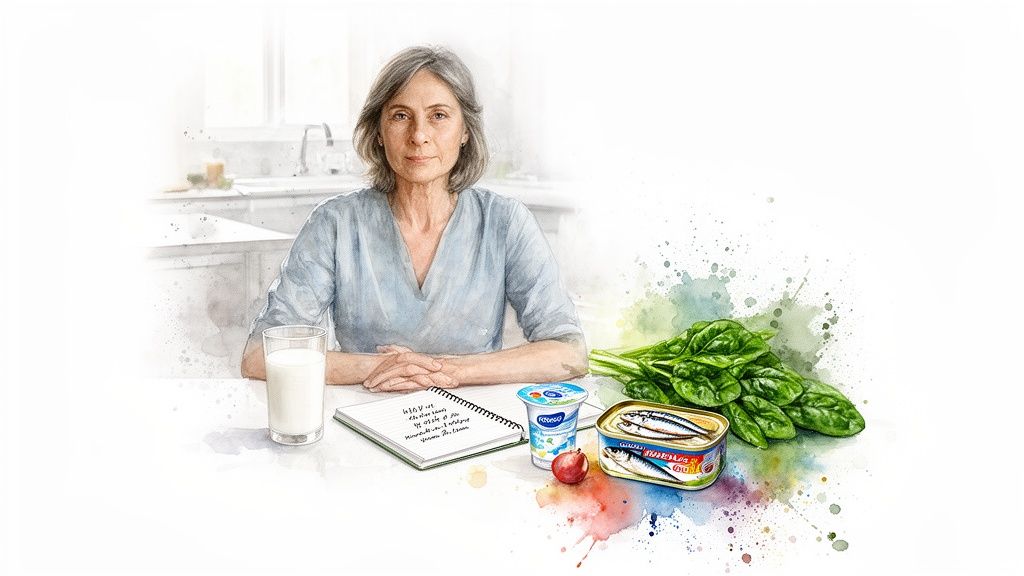
- Dairy: Milk, cheese, and yoghurt are well-known sources. The calcium they contain is typically well-absorbed by the body.
- Fortified Foods: Many plant-based milks (like soya or almond), breakfast cereals, and some breads are fortified with calcium. Checking labels can reveal good options.
- Tinned Fish (with bones): Sardines and pilchards are particularly valuable. Eating the small, soft bones provides a significant dose of calcium.
- Leafy Greens: Foods like kale, broccoli, and bok choy are good plant-based sources. It's worth noting that while spinach contains calcium, it also has compounds called oxalates, which can reduce its absorption.
Incorporating a few servings of these foods into your daily meals can help you meet the 700mg target as part of a normal routine.
In clinical settings, the focus is on helping people build sustainable eating habits. This means moving away from fixating on a single 'superfood' and toward consistently including a variety of calcium-rich foods in your weekly diet.
The Role of Vitamin D: Sunlight and Food
Vitamin D is often called the "sunshine vitamin" because our skin naturally produces it upon exposure to sunlight. However, in the UK, the sun is not strong enough between October and early March for adequate vitamin D production.
Because very few foods are naturally rich in vitamin D, UK health bodies recommend that all adults consider taking a daily supplement containing 10 micrograms (mcg) of vitamin D during the autumn and winter months.
While a supplement is often the most reliable way to ensure adequate levels, you can also support your intake through your diet:
- Oily Fish: Salmon, mackerel, and fresh sardines are among the best natural sources.
- Fortified Foods: Similar to calcium, vitamin D is often added to cereals, spreads, and plant milks.
- Red Meat and Eggs: These contain smaller amounts, but they contribute to your overall daily intake.
The synergy between calcium and vitamin D is one of the most important factors in a diet designed for bone protection. For those who find it difficult to get enough through diet and sunlight, it can be useful to understand how high-potency calcium and D3 supplements are formulated to support bone health.
The Supporting Nutrients for Stronger Bones
While calcium and vitamin D are the cornerstones of bone health, it is a common misunderstanding that they work alone. A truly bone-protective diet involves a team of nutrients working in concert.
Think of building a house. Calcium provides the bricks, but you also need a skilled crew to get those bricks to the site, place them correctly, and cement them into a strong wall. These supporting nutrients are that essential crew.
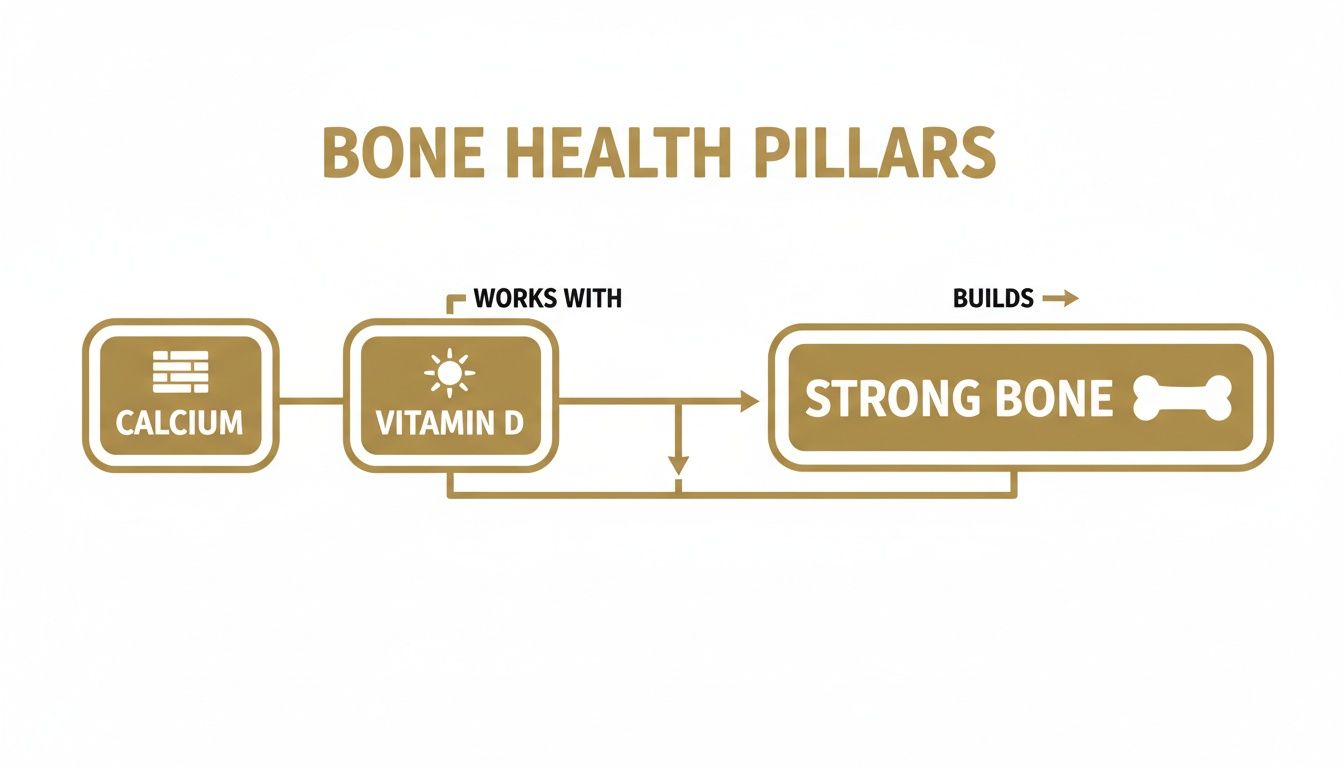
As the diagram shows, even the relationship between the two main nutrients is co-dependent. Calcium is the raw material, but your body can't absorb it effectively without sufficient vitamin D. Let's look at the other members of the team.
Vitamin K: The Calcium Traffic Controller
One of the most crucial, yet often overlooked, nutrients is vitamin K. If vitamin D helps get calcium into the body, vitamin K acts like a traffic controller, directing that calcium specifically into your bones and helping it bind to the bone matrix. Without enough vitamin K, some of this valuable calcium may not end up where it's needed most.
Dark leafy greens like kale, spinach, and broccoli are excellent sources. However, national survey data suggests that intake is often low, with over 50% of people in the UK falling short of recommended levels. This pattern is often linked to a lower consumption of cooked green vegetables and has been associated with poorer bone mineralisation.
For those who find it challenging to consistently eat enough leafy greens, it's worth understanding how products like vitamin K with D3 are specifically formulated to work together.
Magnesium: The Vitamin D Activator
Magnesium is another key player working behind the scenes. Its role in bone health is fundamental: it is required to convert vitamin D into its active form. Without enough magnesium, your body cannot unlock the full potential of the vitamin D you get from food, sun, or supplements.
This means that even if vitamin D intake appears adequate, a magnesium deficiency can create a significant roadblock in your body's ability to use it for building bone.
Good sources of magnesium include:
- Nuts and seeds (almonds and pumpkin seeds are excellent choices)
- Legumes (black beans, chickpeas, lentils)
- Wholegrains
- Dark chocolate
Protein: The Bone’s Scaffolding
It's a common misconception that bones are just hard, inert minerals. In reality, about 50% of bone volume is a flexible protein matrix. This protein framework acts as a scaffold, creating the structure upon which minerals like calcium and phosphate are deposited to provide hardness and density.
Without a strong protein foundation, bones can become more brittle. Ensuring adequate protein intake is therefore as important as getting enough calcium. Good sources include lean meats, fish, eggs, dairy, legumes, and tofu. For a deeper understanding of your personal needs, you can review this complete guide to protein intake.
Potassium: The Acid Neutraliser
Potassium plays a more subtle, protective role. Certain foods, particularly highly processed ones, can create a slightly more acidic environment in the body as they are metabolised. To neutralise this acid and maintain a stable pH, the body may sometimes draw calcium from the bones—its largest mineral reserve.
Potassium, which is abundant in fruits and vegetables, is alkaline. By consuming plenty of potassium-rich foods, you help your body maintain its natural pH balance without needing to "borrow" calcium from your skeleton. This can help preserve bone density over the long term. Bananas, avocados, sweet potatoes, and spinach are all excellent sources.
Key Supporting Nutrients for Bone Health
This table summarises the key nutrients—beyond calcium and vitamin D—that play a critical role in maintaining a strong skeleton.
| Nutrient | Role in Bone Health | Excellent Food Sources |
|---|---|---|
| Vitamin K | Helps direct calcium into the bone matrix and bind it there. | Kale, spinach, broccoli, Brussels sprouts, spring onions. |
| Magnesium | Essential for converting Vitamin D into its active form. | Almonds, pumpkin seeds, black beans, avocados, dark chocolate. |
| Protein | Forms the flexible matrix or "scaffolding" of bone (about 50% of bone volume). | Lean meat, fish, eggs, dairy, lentils, tofu, quinoa. |
| Potassium | Helps neutralise acids, which may prevent calcium from being leached from bones. | Bananas, sweet potatoes, spinach, avocados, white beans. |
The effectiveness of a bone-healthy diet lies not in any single nutrient, but in how they all work together. This is why a varied, whole-food diet is so often recommended—it naturally provides the entire team your bones need to stay strong.
Building Your Plate with Bone-Supportive Food Patterns
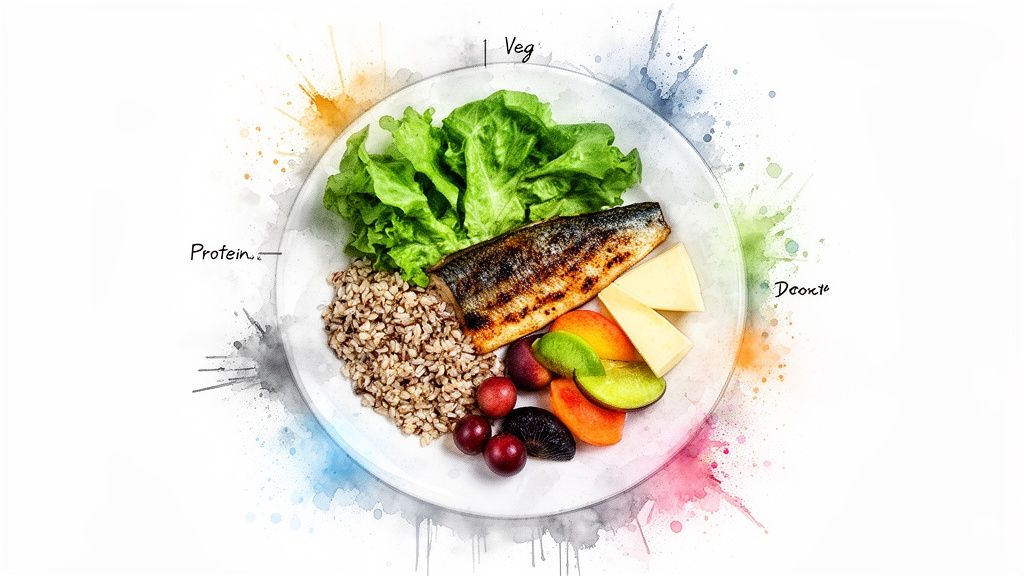
While understanding specific vitamins and minerals is useful, we don't eat nutrients in isolation—we eat food. This is why the conversation in nutrition has shifted from single ingredients toward the broader concept of dietary patterns.
A dietary pattern describes the overall theme of how you eat. It's not about a single 'perfect' meal or a rigid set of rules, but rather the flexible, long-term habit of the types of foods that regularly appear on your plate. For bone health, the aim is to create a pattern that consistently delivers a whole team of supportive nutrients.
The 'Healthy' Diet Pattern for Bones
UK guidelines often refer to a ‘healthy’ dietary pattern for supporting bone health. This isn't a vague suggestion; it describes a well-researched way of eating that has been shown to help maintain bone density.
In practice, this eating style typically:
- Is high in fruits and vegetables: These provide potassium to help neutralise bone-leaching acids and vitamin C for building the collagen matrix of your bones.
- Emphasises whole grains: Brown rice, oats, and wholemeal bread are good sources of magnesium and other minerals that contribute to your bone structure.
- Includes lean proteins and fish: Protein creates the scaffolding of bone. Oily fish also provides vitamin D and anti-inflammatory omega-3s.
- Ensures adequate dairy or fortified alternatives: These remain one of the most reliable sources of easily absorbed calcium.
This approach is effective because it delivers all the key players—calcium, vitamin D, K, magnesium, and protein—that work in synergy. It's also naturally anti-inflammatory, which may help counter the kind of chronic, low-grade inflammation that can accelerate bone loss. The olive oil Mediterranean diet is a great real-world example of this type of bone-friendly eating pattern.
The Impact of a 'Western' Dietary Pattern
On the other hand, there is what researchers often call the 'Western' diet. This pattern is typically characterized by a high intake of red and processed meats, refined grains like white bread, fried foods, and sugary drinks.
This style of eating may undermine bone health in several ways:
- High Sodium: Processed foods are often high in salt. Excess sodium can cause the body to excrete more calcium through urine.
- Inflammatory Foods: High sugar and unhealthy fat intake may promote systemic inflammation, a process linked to increased bone breakdown.
- Nutrient Displacement: When a diet is dominated by processed foods, there is often less room for the nutrient-rich fruits, vegetables, and whole grains the skeleton needs.
In clinical practice, we observe that small, consistent shifts away from a 'Western' pattern and toward a whole-foods approach can make a meaningful difference over time. The goal is progress, not perfection.
Evidence from the UK Biobank illustrates this. Researchers found that while simply adding oily fish to an otherwise unchanged diet doesn't have a major protective effect on its own, it is a hallmark of the overall 'healthy' dietary pattern recommended by the National Osteoporosis Guideline Group (NOGG). This pattern, rich in fish and produce, is associated with a modest but significant reduction in the risk of low bone mineral density and hip fractures when compared to 'Western' diets. You can explore the research on dietary patterns and fracture risk to understand these links more deeply.
The aim is to find a sustainable way of eating that you enjoy. Try shifting your focus from what to remove to what you can add—another portion of vegetables, a serving of oily fish each week, or a daily handful of nuts. Over time, these small additions can build a powerful, bone-supportive dietary pattern.
For more practical tips and recipe ideas, feel free to explore our nutrition blog.
How to Put Your Bone-Healthy Diet into Practice
Knowing which nutrients your bones need is one thing; consistently getting them onto your plate is another. Let's translate the theory into a practical, real-life approach.
This isn't about following a rigid, complicated plan. It’s about weaving these principles into your daily routine in a way that feels both achievable and enjoyable. The following sample day of meals illustrates how you can easily pack your diet with nutrients that support your bones.
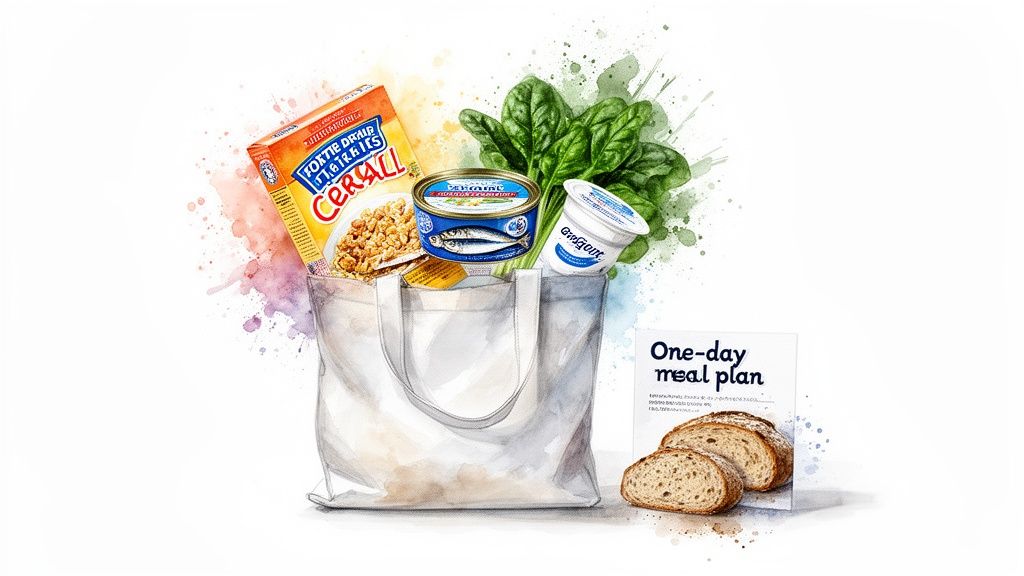
A Sample One-Day Bone-Healthy Meal Plan
This example shows how a single day of eating for bone health could look, using simple, widely available foods. Think of this as a flexible blueprint, not a strict set of rules.
Sample One-Day Bone-Healthy Meal Plan
| Meal | Food Item | Bone-Health Rationale |
|---|---|---|
| Breakfast | Bowl of fortified cereal with semi-skimmed milk and a handful of almonds. | The fortified cereal and milk deliver calcium and vitamin D. Almonds contribute magnesium and some plant-based protein. |
| Lunch | Two slices of wholemeal bread with tinned sardines (in oil, with bones) and a side salad of spinach, red pepper, and a light vinaigrette. | Sardines provide calcium (from the edible bones), vitamin D, and omega-3s. Wholemeal bread adds magnesium, while the salad brings vitamin K and vitamin C. |
| Dinner | Grilled chicken breast or a large portion of tofu with a baked sweet potato and steamed broccoli. | The chicken or tofu provides high-quality protein for the bone's structure. Sweet potato and broccoli offer potassium, magnesium, and more vitamin C. |
| Snack / Dessert | A pot of plain low-fat yoghurt with a few berries stirred in. | Yoghurt is another excellent, easily absorbed source of calcium and protein. Berries add flavour and antioxidants without excess sugar. |
The key takeaway is the pattern. Each meal combines a protein source, a calcium-rich food, and colourful fruit or vegetables. This simple formula is the foundation of eating well for your bones.
Your Corresponding Shopping List
To make things even simpler, here is a straightforward shopping list based on the meal plan above, organised by supermarket aisle.
Dairy & Alternatives
- Semi-skimmed milk (or fortified soya/oat milk)
- Plain low-fat yoghurt
Pantry & Tins
- Calcium-fortified breakfast cereal (check the label)
- Wholemeal bread
- Tinned sardines or pilchards (in oil, with bones)
- A small bag of almonds
Produce
- A bag of spinach or mixed salad leaves
- One red bell pepper
- A sweet potato
- A head of broccoli
- A punnet of berries (fresh or frozen)
Meat & Fish / Protein
- Chicken breasts (or a block of firm, calcium-set tofu)
The best diet for osteoporosis is one that you can stick with long term. Focusing on accessible, affordable, and versatile foods is a more sustainable approach than searching for rare or expensive 'superfoods'.
Ultimately, building a bone-friendly diet doesn't have to mean a complete overhaul of your life. By making a few smart, deliberate choices when you shop and cook, you can create a powerful habit that supports your bones day in and day out.
Bringing It All Together: Diet, Lifestyle, and Medical Care
A bone-friendly diet is a crucial foundation, but it is most effective when integrated into a larger, cohesive plan. Thinking of food in isolation is a common pitfall.
True effectiveness comes from combining nutrition with other lifestyle choices and, when necessary, medical support. It's about creating a total environment where your bones are not only well-nourished but also actively prompted to get stronger and are shielded from unnecessary risks.
The Perfect Partnership: Diet and Exercise
Your diet provides the building materials, but exercise is what signals to your body where to use them. Weight-bearing and resistance exercises are particularly beneficial because they apply a productive stress to your skeleton. This physical loading sends a direct message to your bone cells to "fortify this area."
Activities that send this message include:
- Weight-bearing exercises: Brisk walking, jogging, dancing, or even taking the stairs—anything that works against gravity.
- Resistance exercises: Lifting weights, using resistance bands, or using your own body weight in activities like yoga or Pilates.
When you exercise regularly, your body is prompted to use the calcium, protein, and other nutrients from your food to build denser, stronger bone. It’s a true partnership. Without the right nutrients, the signal from exercise may go unanswered. Without the exercise signal, the nutrients lack clear instructions on where to go.
Why Preventing Falls Is So Crucial
Building new bone is only half the picture; protecting the bone you already have is just as important. For someone with osteoporosis, a simple fall can have serious consequences, which is why fall prevention is a top priority in any management plan.
While diet doesn't directly prevent falls, the nutrients you consume play a vital supporting role. Adequate protein intake helps maintain the muscle mass and strength needed for good balance and stability. At the same time, maintaining healthy vitamin D levels has been shown to improve muscle function, which can further reduce fall risk. This is another example of how a good diet creates a wider safety net.
How Your Diet Supports Medical Treatment
For many people diagnosed with osteoporosis, dietary changes alone may not be sufficient to reverse significant bone loss. This is where medical treatments come in. Medications such as bisphosphonates (e.g., alendronic acid) or injectable treatments (e.g., denosumab) are often essential for slowing down bone loss or stimulating new bone growth.
It is critical to view diet and medicine not as an 'either/or' choice, but as a team working toward the same goal. A well-planned diet ensures your body has all the resources it needs to respond effectively to these treatments.
A bone-building medication can only work if the raw materials—calcium, vitamin D, protein—are available. A supportive diet helps to maximise the effectiveness of your prescribed treatment.
This integrated approach is the standard of care. If you are on treatment or considering it, an open conversation with your GP or specialist is essential. You can find more on managing your condition in our other osteoporosis patient information guides. The ultimate aim is to work with your healthcare team to build a complete, personalised strategy for your long-term bone health.
Your Questions on Osteoporosis and Diet, Answered
As you start to apply this knowledge to your daily life, questions will naturally arise. Here are some of the most common queries that people have when they begin eating for better bone health.
Are There Foods I Should Cut Out Completely?
This is a common concern, but a long list of "forbidden" foods is generally not necessary or helpful. The approach most experts recommend focuses on balance and moderation rather than total elimination.
Think of it less as a list of rules and more about tipping the scales in your favour. For instance, very high amounts of salt can cause the kidneys to excrete more calcium. Similarly, excessive caffeine or alcohol can interfere with how the body manages its calcium stores. The goal is to reduce reliance on highly processed foods, which are often high in salt and low in nutrients, and shift towards a diet rich in whole foods.
Can I Follow a Vegan or Dairy-Free Diet and Still Protect My Bones?
Absolutely. A well-planned plant-based diet can support bone health, but the key phrase is "well-planned." It requires careful attention to ensure you're getting all the necessary nutrients.
Without dairy, you’ll need to be deliberate about finding good sources of calcium. Look for:
- Fortified plant milks (soya, oat, or almond)
- Tofu that has been set with calcium sulphate
- Calcium-fortified breads
- Leafy greens, such as kale and bok choy
Beyond calcium, it is also important to ensure you have reliable sources of protein, vitamin D, and vitamin B12. If you are making this dietary change, a conversation with a dietitian can be very valuable to make sure your eating plan is fully supporting your bones.
Should I Start Taking Calcium Supplements Just in Case?
Not necessarily. It's generally best not to start taking supplements without guidance. A "food first" approach is almost always the best starting point. Calcium from food comes packaged with other beneficial nutrients that work together.
Supplements have a place, but they are typically for situations where you cannot get enough calcium from your diet alone.
It is important to speak with your doctor before starting any new supplement. Taking too much calcium, especially from supplements, can have risks and may not be suitable for everyone. Your doctor is the best person to assess your diet, health, and risk factors to decide what is appropriate for you.
At The Patients Guide, we believe that understanding the 'why' behind health advice is the first step towards making better choices. While this article offers clarity on diet, we know that true management involves connecting all the dots—from symptoms and causes to treatments and lifestyle changes.
For those who want to go beyond articles and build a structured, comprehensive understanding of osteoporosis, our guides are designed to help you do just that.
Also in News


Blood Test Results Time: Your UK Guide
Get precise blood test results time info for the UK in 2026. Understand NHS turnaround, common delays, how to check your results, and when to contact your GP.
Read More


Headache Quick Remedy: Immediate Relief Guide
Headache quick remedy - Find a headache quick remedy that works. Our guide helps you understand your headache and choose safe, effective action for immediate
Read More


Mouth Ulcers Treatment: A Clear Guide
A calm, clear guide to mouth ulcers treatment. Learn about causes, self-care, OTC options, when to see a doctor, and how to prevent recurring ulcers.
Read More